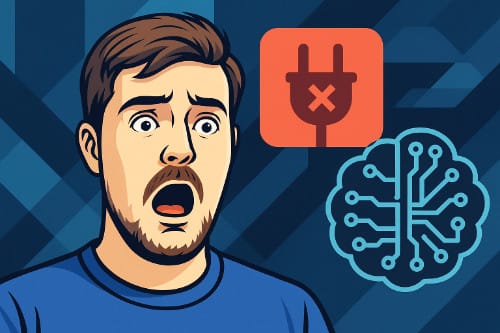
When the world’s most famous YouTuber quietly launches a new AI tool, the internet pays attention. When he quietly shuts it down two weeks later? Now we’re really paying attention.
That’s exactly what happened when Jimmy Donaldson — aka MrBeast — tried to dip a toe into the growing world of AI-powered creator tools. The experiment, a website called Beast AI, promised to help YouTubers generate better thumbnails and titles using artificial intelligence. But despite the hype, it was quickly yanked offline. So… what happened?
Let’s take a closer look at the rise and fall (and maybe eventual return?) of Beast AI — and what it reveals about the challenges and opportunities in the evolving creator economy.
The Premise: AI for Thumbnails and Titles
If you’ve ever posted to YouTube, you know how weirdly hard it is to get people to click. MrBeast is legendary for spending hours tweaking thumbnails and titles to maximize curiosity and emotional punch. He’s even said he tests 20–30 thumbnail versions per video.
So it made perfect sense when he announced Beast AI — an online tool to help creators write better titles and design more clickable thumbnails, backed by the same kind of optimization logic he uses on his own videos.
At launch, the site offered:
- AI-generated YouTube titles based on a video description or concept
- Thumbnail suggestions, plus the ability to upload your own images
- A MrBeast-style rating system for how clickable your content was likely to be
It was simple, stylish, and smart — at least on paper.
The Sudden Shutdown
Within two weeks, the site was gone.
The homepage now reads:
“We’ve decided to shut down this experiment for now. Thanks for trying it out!”
No drama. No controversy. No further explanation.
Of course, that didn’t stop the internet from speculating wildly.
So, Why Did It Disappear?
Here are the most likely reasons:
1. Brand Risk
AI content is controversial — especially when it starts replacing human creativity. MrBeast’s brand is built on extreme effort and authenticity. If an AI tool he endorsed started spitting out mediocre or spammy content, it could tarnish that image.
2. Quality Control
Early users reported mixed results. Some thumbnails were solid. Others looked… robotic. Scaling this kind of AI to match MrBeast-level performance is hard — and the tech may not have been ready for primetime.
3. Legal or Copyright Issues
Training AI on existing thumbnails or using generative image models opens a can of worms. Even if Beast AI wasn’t directly copying anyone’s work, the optics (and risks) of AI in the creative space are increasingly sensitive.
4. Strategic Pause
This could be a classic soft launch — a beta test dressed up as a product, meant to gather feedback and quietly regroup. MrBeast is famously iterative. He might just be going back to the drawing board.
What This Means for Creators (and AI Startups)
The Beast AI saga highlights a few key truths:
- Even top creators can’t guarantee a hit when it comes to AI products. Credibility helps, but so does execution — and timing.
- AI tools need to be really good if they’re going to replace or support human creativity. Half-baked output isn’t just annoying; it can hurt your brand.
- The creator economy is hungry for AI tools, but trust is a big factor. People want help, not homogenization.
For solopreneurs and indie creators, this is both a cautionary tale and a green light. There’s room for smart, useful AI tools — especially those that assist rather than replace.
Where It Might Go Next
Don’t be surprised if MrBeast returns with a refined version — maybe one that’s more like a private tool for vetted partners. Or maybe he folds it into a larger creator academy or content lab.
Either way, the experiment made one thing clear: the intersection of AI and creativity is heating up fast. And even the biggest names are still figuring it out.