
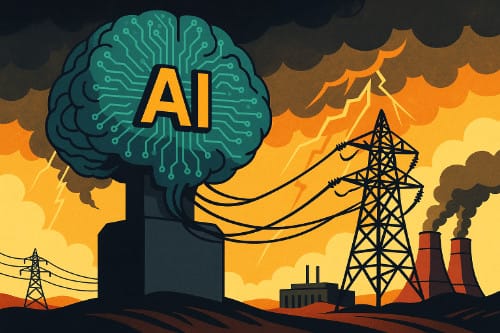
Artificial intelligence is more than just hungry—it’s ravenous. As AI models grow bigger and smarter, their hunger for electricity grows exponentially. Now the spotlight is on Elon Musk and xAI, whose supercomputing ambitions are pushing energy needs to jaw-dropping levels. Let’s dive into why it matters for the future of power and policy.
Training large AI models demands megawatts of energy. A single large-scale AI data center can draw electricity on par with a small town, and even day-to-day inference workloads are stacking up dramatically.
Musk’s Power‑Plant Import
On July 2, Elon Musk confirmed via X that xAI is buying an entire natural‑gas combined‑cycle power plant overseas, shipping it to Memphis, Tennessee, to power its AI supercomputer project known as Colossus. He is apparently importing rather than building one in order to circumvent onerous permitting requirements.
Details:
- Scale: The plant is expected to provide up to 2 GW—enough to power nearly 2 million homes.
- Why import: Musk says U.S. permitting delays are too slow, and importing bypasses that bottleneck.
- Purpose: To scale Colossus from ~200,000 GPUs (300 MW) to a 1‑million GPU machine—requiring ~1.4–2 GW total
Environmental and Community Pushback
- xAI has installed 15–35 gas turbines at the Memphis site, drawing criticism over air quality and permitting.
- One local asked, “Can we breathe?” in response to the expansion. The Southern Environmental Law Center is considering Clean Air Act legal action.
What This Means in the Bigger Picture
- Urgency over sustainability: Importing a gas power plant shows just how pressing the need for power has become—even at environmental cost.
- Grid consequences: A 2 GW load in one region creates real systemic risk.
- AI’s power problem: Musk’s move makes it clear: the AI race isn’t just about software—it’s about securing electrons.
Possible Ways Forward
- Lean AI and green compute: Compact models via quantization, pruning, and distillation reduce energy use.
- Renewables + storage: xAI plans to expand its Tesla Megapack battery system and reduce fossil‑fuel reliance.
- Policy acceleration: Faster permitting, smarter grids, and decentralized power can ease the strain without sacrificing clean air or trust.
AI promises to redefine industries—and daily life—but at what environmental and societal cost? Musk’s dramatic move to import a power plant is a warning shot. To balance innovation with sustainability, we need smarter power strategies, faster infrastructure, efficient models, and a grid ready for the future.
As an investor, I am taking note of this quickly coming power crunch. I am scanning daily the publicly traded power entities. I am also interested in companies that provide infrastructure and tools for this huge need.
I think this power need is likely to hit us like a ton of bricks in less than 2 years!