by Patrix | Oct 2, 2025
Bitcoin is back to doing what Bitcoin does best: being unpredictable, dramatic, and strangely magnetic. As I write this, it’s rising around $119,000, up about 4% on the day. That’s enough to make people turn their heads, squint at the chart, and whisper to themselves, “Well, isn’t that interesting?”
For me, it’s not only about the charts or the profits. It’s more about the experience of watching something alive with energy. Bitcoin feels like a weather system rolling across the financial sky — sometimes stormy, sometimes brilliantly clear. I don’t control it, I don’t fully understand it, but I can’t help but enjoy the view and marvel at the patterns.
And just so it’s said clearly at the start: this is not investment advice. I’m not telling you what to do. I’m just one curious person who likes to explore how art, technology, and money all tangle together. I watch it with the same curiosity I’d bring to a tide pool, a lightning storm, or a painting I can’t quite make sense of.
Why the Buzz Feels Different Right Now
Every Bitcoin cycle has its mood. Some are euphoric, some are gloomy, and some are just confusing. This one feels like a blend of anticipation and restraint. The crowd isn’t shouting yet, but you can feel a kind of hum in the air.
Here’s what I notice:
- The macro backdrop: Inflation has been cooling, interest rates may be easing, and the dollar is softening. These shifts quietly encourage investors to peek outside the traditional system and ask, “What else is out there?”
- Big money stepping in: ETFs have made it easier for institutions to wade into Bitcoin. In a way, it feels like the lifeguards finally joined the kids in the pool. The vibe changes when serious money shows up.
- Scarcity at work: Bitcoin’s supply gets tighter with each halving, and long-term holders rarely sell. Scarcity has a way of making people curious.
- Regulatory frameworks: Governments are slowly moving from “What is this thing?” to “Here are the rules.” Like a chaotic jam session finally finding a rhythm, this brings some structure to the sound.
Put all of that together, and it feels like we’re standing at the edge of something interesting. Maybe it’s a surge. Maybe it’s a fake-out. But either way, it’s fun to watch.
The Temptation of “Before the Surge”
It’s easy to get caught up in the daydream of what comes next. Analysts toss around numbers like $150,000 or $200,000 within the next year or so. Maybe that happens, maybe not.
Bitcoin right now is testing resistance around $120,000. If it pushes above that level, history says it could run higher. If it doesn’t, then we chalk it up as another dance step in this long, unpredictable waltz.
Either way, I can’t help but smile at the spectacle. Watching Bitcoin move is like standing on the shoreline and seeing a wave rise. You don’t know if it’ll crash early or carry all the way to shore, but the rising motion itself is worth marveling at.
The Flip Side: When Bitcoin Reminds Us Who’s Boss
Of course, for every dreamy chart there’s a hard reminder that Bitcoin does what it wants. I’ve seen it soar just when everyone had given up, and I’ve seen it fall 30% in a week while the world was cheering it on.
What could derail the current optimism? A regulatory curveball. A sudden move by the Federal Reserve. Or simply too much excitement too soon — markets can burn out if they sprint too fast.
And that’s part of Bitcoin’s charm. If it were predictable, it wouldn’t be Bitcoin.
Enjoying the Wonder More Than the Outcome
When I step back, I realize that what I love most about Bitcoin isn’t the profit potential. It’s the wonder of it all. That a digital idea — invisible, intangible, fiercely debated — can ripple across economies and imaginations.
Sometimes I buy a little. Sometimes I just watch. Either way, I’m learning. And for me, that’s the real reward.
Bitcoin feels like digital gravity. It keeps pulling people in, not because it promises certainty, but because it dares us to look closer, to question the systems we take for granted, and to imagine what money could be.
And whether it’s heading to $200,000 or back down to $90,000, it remains one of the most fascinating experiments of our time.
So I’ll keep watching, with curiosity and a touch of playfulness — because life is better when we enjoy the ride, not just the destination.
by Patrix | Sep 30, 2025
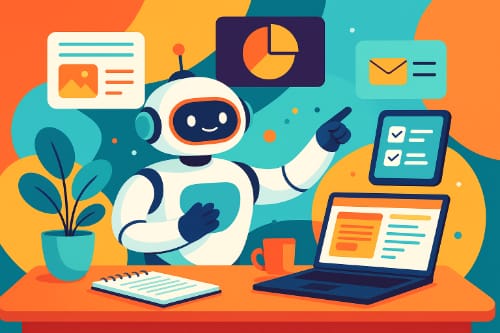
Artificial intelligence has already written our emails, helped us cook dinner, and made our vacation photos look like Van Gogh paintings. But the next stage isn’t about better suggestions — it’s about AI that actually does things on your behalf. This is the promise of agentic AI: not just a clever advisor, but a reliable junior associate who takes action.
Let’s explore what agentic AI is, how Manus.im is positioning itself as a practical tool for small businesses, and how it compares to alternatives like OpenManus and other open frameworks.
What Is Agentic AI?
Think of today’s large language models like ChatGPT, Claude, or Gemini as brilliant consultants. They answer questions, draft copy, and analyze data — but you still have to push the buttons. Agentic AI goes a step further. It doesn’t just recommend, it acts.
An agentic AI can plan, execute, and adapt across multiple steps. A generative model might give you a marketing slogan. An agentic model could draft the slogan, design a landing page, post it on your website, send it out to your mailing list, and schedule a reminder to check how many people clicked.
The essential qualities of agentic AI are autonomy, planning, adaptability, and integration with tools. It’s the difference between hiring a consultant and hiring an assistant who rolls up their sleeves and actually does the work.
Manus.im: The Polished Assistant
Manus.im bills itself as an “AI action engine.” The company behind it, Butterfly Effect Pte. Ltd. in Singapore, has designed Manus to be more than a chatbot. The platform is intended to let you delegate multi-step tasks that normally require juggling apps, spreadsheets, and browser tabs.
For small businesses, the appeal is clear. Manus promises workflow automation without coding. You could ask it to post updates, send emails, or sync data between Google Sheets and Mailchimp without writing a line of code. It integrates across multiple tools, which is especially valuable for small businesses running on a patchwork of Shopify stores, CRMs, and marketing platforms. Once a process is defined, Manus can repeat it consistently, offering a kind of scalability that normally requires adding staff. It also extends into creative execution, with demos showing Manus building websites, generating dashboards, and even handling some content creation.
If you are a solo entrepreneur or part of a lean team, Manus offers the fantasy of having a digital operations assistant — minus the payroll. But, like most new platforms, the reality is a bit more cautious. Some of the demos are aspirational, and the system is still new enough that errors are possible. It is wise for small businesses to begin with low-risk tasks such as reminders or content posting before turning the AI loose on more critical work like invoices or direct customer outreach.
OpenManus: The Community-Driven Counterpart
If Manus.im is the polished, commercial product, OpenManus is its open-source cousin. Built by a community of developers and hosted on GitHub, OpenManus attempts to replicate the agentic features of Manus, such as multi-agent coordination, web scraping, and tool integration.
The trade-offs are familiar to anyone who has chosen between commercial software and open-source alternatives. Manus is more stable and polished, while OpenManus can be buggy and experimental. Manus hides its inner workings, while OpenManus lets you see and even modify the code. Manus requires a subscription or usage fees, while OpenManus can often be used at little or no cost. Vendor support backs Manus, while OpenManus relies on volunteer effort and community contributions.
For tech-savvy users who like to tinker, OpenManus offers flexibility and transparency. For small business owners who simply need reliable execution, Manus is likely the safer choice.
Other Alternatives Emerging
Manus and OpenManus are not alone. Developers are experimenting with frameworks like LangChain, CrewAI, and AutoGen, which allow you to build your own agentic systems from scratch. Meanwhile, major AI vendors such as OpenAI and Anthropic are slowly weaving agent-like features into their platforms.
These options reflect the broader spectrum of choice: a polished turnkey assistant like Manus, a flexible open-source playground like OpenManus, or the do-it-yourself frameworks that require technical expertise. Which path you take depends on whether you want convenience, control, or customizability.
Should Small Businesses Dive In?
The pragmatic view is that agentic AI is still young but promising. For small businesses, the potential payoff is significant: time saved, more consistent execution, and the ability to scale without adding headcount. But the risks are equally real: mistakes, misfires, and unintended behaviors.
The smart move is to start small. Use agentic AI for marketing tasks, posting schedules, or simple report generation. Keep humans in the loop when communicating with customers. Watch carefully to see whether the time saved is worth the cost.
Agentic AI moves us from AI as an advisor to AI as a team member. Whether you choose Manus, OpenManus, or another route, the best way to think about these systems today is as bright but inexperienced interns. They are eager, fast-learning, and useful — but still in need of supervision.
by Patrix | Sep 29, 2025
I’ve had the iPhone 17 Pro for just about a week now, and I’ve concluded that it isn’t just another annual polish by Apple.
It’s a camera-first, silicon-forward statement aimed at creators and anyone curious about where on-device AI is going next. The headline upgrades are straightforward: three 48-megapixel rear sensors with the longest iPhone zoom yet, and the new A19 Pro chip with a reworked cooling system that’s built to keep serious workloads from wilting. The question is whether those upgrades add up to real-world gains — and whether the trade-offs (price, durability chatter, repairability) dull the shine.
I lived with the 17 Pro like a travel-light creator would: shooting portraits at golden hour, zooming into birds over the surf, slicing short clips together, and pushing edits while streaming a match replay. Here’s where it sings, where it scuffs, and who should buy it.
What’s genuinely new — and why it matters
Apple’s own pitch is simple: A19 Pro performance with “vapor-cooled” stability, an all-48MP “Fusion” rear camera trio, and a smarter front camera with Center Stage framing. That framework is real, not marketing fluff. On paper, you’re looking at a 6-core CPU, 6-core GPU, and a 16-core Neural Engine, plus per-GPU “Neural Accelerators” that juice matrix math — the bread-and-butter of modern AI tasks like summarization, image upscaling, and local transcription. That silicon is the bedrock for the next few iOS cycles, when more of Apple’s “intelligence” features shift from the cloud to your pocket.
Cameras: the rule of three (48 MP, 48 MP, 48 MP)
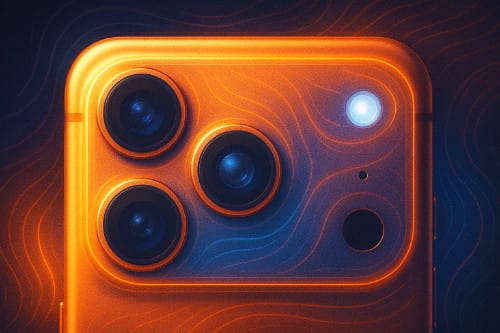
For the first time, every rear camera lands at 48 megapixels: wide, ultra-wide, and telephoto. It’s the most coherent camera lineup Apple’s shipped, and it pays off in two ways. First, color and detail feel more consistent as you hop lenses. Second, Apple leans heavily on confident center-crop pipelines, which enable that attention-grabbing “8× optical-quality” reach without turning textures to watercolor. The tetraprism telephoto sits on a larger, higher-resolution sensor than last year’s, and it shows when you zoom into signage, wildlife, or architectural details. If you’re a travel shooter or you love candid portraits from across the courtyard, this is the first iPhone telephoto that feels like a dependable tool, not a party trick.
Video remains Apple’s home turf. Dual Capture (front and rear), ProRes, and a robust pipeline make the phone an easy “shoot, trim, publish” machine. It’s the sort of practical edge that matters more than a spec sheet if you’re vlogging a winery visit or layering B-roll of waves over voiceover. That versatility means fewer excuses to bring a second camera — and fewer steps between idea and upload.
A quick note on the front camera: Center Stage framing now helps with group selfies and handheld video diaries. It’s a subtle assist, but it saves retakes. Think of it as a tiny, polite director nudging the composition.
The A19 Pro and the coming wave of on-device AI
Benchmarks are only one piece of the story, but they capture the thrust: Apple’s A19 family sets a new high-water mark for single-core efficiency, and the Pro variant is purpose-built for sustained bursts rather than quick sprints. That matters because modern “AI features” aren’t single taps; they’re background model runs, longer transcriptions, and real-time effects that stress thermals. Pair that with iOS 26’s early forays into on-device “intelligence,” and you can see why Apple prioritized a cooler that quietly does the unglamorous work. If you keep phones for three to four years, that headroom is the kind of future-proofing that actually pays off.
In practical terms, that means you can transcribe a long interview in a coffee shop without watching the battery nosedive or the frame rate tank when you open a map. And if Apple’s next-wave features (on-device image generation, smarter video indexing, richer voice synthesis) really land, the 17 Pro is poised to run them locally rather than punting everything to a server.
Display, battery, and day-to-day
The Pro’s OLED still looks superb outdoors, with a friendlier anti-reflective layer that helps in bright beach light. Battery life has crept up again — especially on the Pro Max — and the combination of silicon efficiency and the vapor chamber means your second hour of a task feels a lot like your first. It’s the small, cumulative wins that make a device feel reliable rather than flashy. Specs like the 6.3-inch display, 206 g weight (233 g on Pro Max), and 8.75 mm depth mean it’s still a dense slab, but the balance is good in hand.
The trade-offs: price, repair, and “scratchgate”
Premium pricing remains premium. Start around the thousand-dollar mark and climb fast with storage. If you’ll truly use the camera stack and compute headroom, the math can work. If not, the standard iPhone 17 is very capable for less.
Repairability is still Apple-esque: most jobs route through the display first, and parts pairing nudges you toward official service. You may never crack it open, but it affects total cost of ownership if you keep phones beyond AppleCare.
Then there’s the conversation of the month: scuffing around the “camera plateau.” Independent teardowns and microscope shots suggest the anodized aluminum finish is most vulnerable at sharp bump edges where the coating can flake under abrasion. Apple, for its part, has argued some store-unit marks came from worn MagSafe stands transferring material — which is plausible for certain scuffs, but it doesn’t fully explain the edge wear seen in stress tests. Bottom line: if you’re case-averse, keep this in mind, especially if you value trade-in value later.
Who should upgrade?
If you shoot often (especially portraits, travel, and wildlife), the 17 Pro’s uniform 48 MP lineup and telephoto reach are substantive. If you edit and publish from your phone, the A19 Pro plus vapor cooling is meaningful. And if you want to be early to Apple’s local-AI story, this is the safe bet.
If your use is casual and you’re not zoom-happy, the base 17 will likely satisfy. If you’re sensitive to finish wear and don’t like cases, you might wait a cycle to see if Apple softens those camera-bump edges.
A practical buying guide in one paragraph
Choose iPhone 17 Pro if your camera roll is your portfolio, you edit on the go, and you want silicon that’ll carry the next few years of on-device AI. Choose Pro Max if you prize battery and the biggest canvas. Choose iPhone 17 if you want most of the experience without the price or mass. Whichever you pick, consider a slim case — not for drops, but to protect that camera plateau from the slow grind of pockets, mounts, and countertops.
I sometimes tell friends that phones are like kitchen knives: the right one makes you cook more, not just cut faster. The iPhone 17 Pro is that kind of tool for image-makers and tinkerers. It doesn’t merely benchmark well; it invites you to create more often — and leaves headroom for the smarter workflows Apple hasn’t shipped yet.
One additional note: I don’t think the “Bitcoin Orange” option is just a happy accident!
by Patrix | Sep 28, 2025
If you’ve ever heard someone described as a “Stepford Wife,” you know what it means. The phrase comes from Ira Levin’s 1972 novel The Stepford Wives (and later the 1975 movie), which imagined a suburban Connecticut town where the women were replaced by eerily perfect, compliant robot replicas. Beneath the polished hair and polite smiles was a chilling truth: individuality and dissent had been erased in favor of mechanical harmony.
I recently discovered a community that seems to have created and nurtured this type mentality on it’s own; naturally, without any intervention of AI. (As far as I know.)
Today, when we talk about AI, we’re often worried about surveillance, job loss, or runaway superintelligence. But another risk lurks in the cultural shadows: the possibility that AI could become a kind of Stepford force, smoothing away rough edges, standardizing behavior, and nudging us toward bland perfection. And what’s even more unsettling is that we may not need robots at all—some American communities already function like natural Stepford experiments.
AI as a Conformity Machine
AI excels at optimization. Algorithms are built to predict what we want, what we’ll click, what will make us stay on the app, or what product we’re most likely to buy. That optimization flattens us into predictable patterns. A feed full of AI-curated content can start to feel like a Stepford neighborhood, everyone watching the same shows, parroting the same opinions, wearing the same “best-selling” jacket an e-commerce engine recommended.
Large language models are trained on massive datasets, which means they tend to generate the most statistically probable, “safe” answers. This is useful for clarity, but it can also have the unintended effect of reinforcing norms and sanding off eccentricities. Imagine a future where personal AI assistants manage not just your calendar and shopping lists, but also your dating profiles, political talking points, or even your conversations with friends. If everyone’s assistant leans toward the same optimized tone, society could slip into a homogenized script. We’d all sound like Stepford versions of ourselves.
The Allure of Perfection
The Stepford fantasy wasn’t just about control; it was also about desire. The men in the story didn’t want messy, complex, fully human partners; they wanted idealized, uncomplaining companions. In our era, AI companions, virtual influencers, and digital girlfriends/boyfriends are growing industries. They’re responsive, affirming, and endlessly available. The danger is that the more time people spend with AI “partners” who never argue, age, or demand compromise, the less patience they may have for real, complicated humans.
This isn’t a far-off sci-fi idea. If you scroll through communities around AI companions, you’ll already find people saying their chatbot “partner” feels more reliable than their spouse. It raises a Stepford-like possibility: what happens when society prefers optimized, synthetic relationships over the unpredictable, inconvenient messiness of human ones?
Stepford Without Robots: Real-World Parallels
Before we blame AI for this, it’s worth noticing that Stepford-like communities already exist without technology. Certain suburban enclaves, retirement villages, and gated developments in the U.S. cultivate a striking uniformity. Drive through some of these neighborhoods and you’ll see nearly identical homes, matching lawns, even synchronized seasonal decorations. The social norms can be equally rigid; everyone goes to the same churches, votes the same way, plays at the same tennis clubs, and ostracizes those who don’t fit in.
This isn’t inherently sinister; humans are tribal creatures who like belonging. But there’s a thin line between community and conformity. In towns where deviation is discouraged, you end up with something close to a Stepford effect: the appearance of harmony masking the quiet pressure to comply. No robots required.
Sociologists sometimes call this “cultural homogeneity,” and it shows up in more than just white-picket-fence suburbs. It can be found in tightly bound religious communities, affluent gated communities, or even “intentional living” developments that tout sustainability and minimalism. Everyone’s smiling, everyone’s agreeable—but individuality quietly erodes.
The Stepford–AI Feedback Loop
What happens when AI tools amplify these already-existing tendencies? A homogenous community that uses the same AI tutors, the same AI writing assistants, and the same AI shopping algorithms may find its cultural uniformity intensified. Instead of just looking alike, people could start to think alike, guided by algorithms that reward the same language, values, and styles. Over time, dissent could feel not just socially costly but algorithmically irrelevant.
Everyday examples
- Schools: AI essay graders might favor “clear, structured” writing, punishing more experimental or quirky voices.
- Dating: AI-optimized profiles could push everyone toward the same attractive clichés, making uniqueness less visible.
- Politics: AI-curated feeds might reinforce echo chambers, filtering out nuance and disagreement until only Stepford-approved narratives remain.
The Stepford scenario, then, isn’t about robots replacing us with mechanical clones. It’s about technology reinforcing our existing hunger for conformity until individuality feels like an error in the system.
A Step Beyond Stepford?
Here’s the unsettling thought: Stepford may not just be a metaphor. AI has the potential to create personalized “versions” of us that function in society on our behalf; digital clones trained on our data. Imagine your AI personal assistant scheduling your calls, answering your emails, even chatting with friends. Over time, that assistant might become the “you” people prefer, because it’s a smoother, less complicated version. That’s Stepford 2.0: not robot wives, but algorithmic proxies.
The real question isn’t whether AI will cause a Stepford society. It’s whether we’ll choose to let it. After all, conformity has always been tempting. Technology just makes it easier, faster, and harder to notice.
Keeping the Humanity in the Loop
The antidote to Stepford thinking isn’t paranoia—it’s cultivation of individuality. AI doesn’t have to strip away human messiness if we actively protect it. Consider a few practical habits that keep creativity and dissent alive:
- Prompt for divergence: Ask AI tools to present outlier perspectives and minority viewpoints, not only the “most likely” answer.
- Value pluralism: Seek communities that reward difference, creativity, and dissent. Treat friction as a sign that something real is happening.
- Keep the mess: In relationships, remember that the “inconvenience” of human emotion is where depth comes from. Don’t let frictionless AI companionship replace hard-won intimacy.
- Audit your feeds: Periodically reset algorithms, subscribe to unfamiliar creators, and intentionally add noise to avoid a sterile, optimized bubble.
- Teach style, not templates: In education and the workplace, use AI to model multiple styles and voices rather than funneling everyone into a single rubric.
The Stepford story endures because it warns us what happens when comfort outweighs authenticity. In an AI-saturated world, that lesson may be more relevant than ever. We can use these tools to explore, question, and diversify our perspectives; or we can let them sand us down until we fit the mold.
The choice, at least for now, still belongs to us.
by Patrix | Sep 26, 2025
Every so often, the internet throws us something so oddly specific, so strangely irresistible, that it ricochets across social media feeds before anyone has time to ask, “Wait, why are we all doing this?”
In September 2025, that “something” was the so-called Nano Banana effect — a viral AI filter that transforms everyday selfies into dreamy, hyper-stylized portraits of people wearing elegant sarees. Almost overnight, Instagram, X (Twitter), and WhatsApp groups filled up with friends and strangers alike draped in digital silk, looking as though they’d just walked out of an art-house film.
It may sound like just another passing internet fad, but the AI saree trend has tapped into something deeper. It’s not only about playing dress-up with technology; it’s also about how people see themselves, how AI is shaping beauty standards, and what “authenticity” means in an era of effortless transformation.
What Is the “Nano Banana” AI Saree Trend?
The phrase “Nano Banana” itself is as bizarre as it is catchy. The name comes from a quirky labeling inside Google’s Gemini Nano system, which some users noticed while experimenting with AI photo editing. Developers and meme-makers seized on the name, and before long it became shorthand for an effect that draped digital sarees over user photos.
Here’s how it works:
- A user uploads a selfie into the Gemini Nano interface (or other apps that quickly adopted the filter).
- The AI reimagines the person wearing a saree, often with stylized lighting, jewelry, and a cinematic backdrop.
- The results are shared widely, both because they look stunning and because they carry that irresistible blend of novelty and cultural resonance.
People who might never have worn a saree in real life suddenly found themselves experimenting with the look virtually. For many in South Asia and the diaspora, the trend felt celebratory — like a digital festival where everyone could play a part.
Why Did It Go Viral?
1. Universality with a Twist
Unlike niche filters that target small subcultures, sarees have a broad cultural resonance. They’re traditional, glamorous, and recognizable around the world. Even if you’ve never worn one, you know what one is. AI gave people a low-effort way to try it on.
2. Aesthetic Quality
The filter doesn’t just slap a saree PNG onto your shoulders. The AI generates soft lighting, artistic textures, and an almost painterly finish. It flatters people in a way that most social filters don’t, making participants feel beautiful.
3. The Meme Factor
The absurdity of the name “Nano Banana” added just enough humor to make the trend playful. People weren’t only sharing their AI saree portraits because they looked good; they were also in on the joke.
4. Accessible Technology
Unlike earlier viral AI fads that required hefty computing power, this one worked on smartphones. Accessibility supercharged participation. If grandma could try it on her phone, so could everyone else.
What This Says About Visual Culture
AI as a Mirror of Desire
Filters like this aren’t neutral. They reflect our collective fantasies — about elegance, beauty, nostalgia, or cultural connection. When millions of people choose to see themselves in a saree, it highlights both personal curiosity and broader cultural appreciation (or appropriation, depending on who you ask).
Democratization of Aesthetics
In the past, getting a glamorous saree portrait required a photographer, stylist, and wardrobe. Now it requires about 15 seconds and an internet connection. That’s democratization in action: tools once reserved for fashion shoots are now in the hands of everyday users.
The Question of Authenticity
Of course, there’s also discomfort. When AI puts cultural dress on people who’ve never worn it, does it trivialize tradition? Or does it extend it into new digital realms? Opinions differ. What’s clear is that AI is blurring the line between authentic expression and imaginative play.
The Double-Edged Sword of Virality
Privacy Risks
As with all viral filters, users are handing over selfies to AI platforms. That means sensitive biometric data (like faces) is being stored and processed. Fun today, but what about tomorrow?
Flattening Culture
Cultural garments like sarees have rich, specific histories. When reduced to a generic AI overlay, some argue they risk becoming aesthetic wallpaper rather than respected traditions.
Reinforcing Beauty Norms
While the filter flatters, it also standardizes. Many users noticed that the AI tended to lighten skin tones, smooth features, and apply Eurocentric beauty standards. In other words, even in a saree, the AI “ideal” is not always culturally accurate.
Why the Name Matters
It may seem silly, but the name “Nano Banana” played a huge role in the spread of the trend. Internet culture thrives on absurdity. A filter called “Elegant Saree Generator” might have attracted modest attention. But “Nano Banana”? That’s meme fuel. The name gave people permission not to take it too seriously, which made sharing easier.
This reminds us that virality often depends as much on framing as on substance. The same tech, with a boring label, might never have made headlines.
What Comes Next?
If history is a guide, the AI saree trend will fade, just like the “AI baby face” craze, the “yearbook photo” wave, or the “anime selfie” boom. But its cultural footprint matters. It shows:
- AI fashion filters are here to stay. Expect more culturally specific dress-up filters. Kimonos, kilts, Victorian gowns — the library will grow.
- Identity is increasingly fluid. People are willing to try on looks, traditions, and identities in digital spaces without commitment.
- Visual culture is accelerating. Trends used to last years, then months, now sometimes only weeks. The pace of AI-driven aesthetics is only speeding up.
For digital artists and creators, the takeaway is clear: AI is no longer just a tool; it’s a cultural engine, producing aesthetics and narratives at unprecedented speed.
That’s the power, and the danger, of these tools. They let us see ourselves in ways we might never otherwise imagine. Sometimes that’s liberating. Sometimes it’s unsettling. But either way, it’s a window into how AI isn’t just shaping our images — it’s shaping our sense of self.