by Patrix | Sep 12, 2025
If you’ve ever dug your hands into rich garden soil and noticed the earthy smell, you’ve already met the silent microfauna orchestra beneath your feet. That scent is partly produced by soil microbes—the bacteria, fungi, nematodes, and tiny critters that transform dirt into life-giving earth. For centuries, gardeners worked mostly by feel and observation: is the soil crumbly? Does it smell fresh? Do the plants thrive? Today, technology offers us a chance to peer into that underground world and actually measure the health of soil life.
Why Microfauna Matter
Soil is not just “dirt.” It’s a living system, and its microfauna are the engines that power it. Bacteria fix nitrogen, fungi form symbiotic networks that feed roots, nematodes recycle nutrients, and protozoa keep the whole system in balance. If these microscopic players vanish or weaken, plants become more vulnerable to disease, pests, and nutrient deficiencies.
Think of soil microfauna like a city’s infrastructure. If the water pipes and power lines stop working, life above ground quickly suffers. Likewise, when the microbial highways underground break down, plants can’t flourish no matter how much fertilizer you add. That’s why gardeners, farmers, and even urban balcony growers are paying closer attention to the hidden life in their soil.
Old-School Soil Testing vs. Tech-Assisted Insights
Traditional soil testing focused on chemistry: nitrogen, phosphorus, potassium (the famous NPK trio). While that’s still important, it ignores the biological side of soil health. Enter modern tools that let you explore living soil rather than just dead minerals.
- Phone microscopes: A simple clip-on lens can turn your smartphone into a mini-lab, letting you see fungal threads, wiggling nematodes, or clusters of bacteria.
- Soil respiration meters: These measure how much CO₂ your soil produces, a proxy for microbial activity. More “breathing” means more life.
- AI-assisted apps: Emerging tools let you snap photos of soil organisms and get instant identification—like Shazam, but for microbes.
- Citizen science platforms: Upload soil-life images and contribute to global biodiversity maps. Your backyard microbes may help researchers understand planetary ecosystems.
This doesn’t require a PhD or a thousand-dollar lab setup. The beauty of today’s tech is that hobbyists can start small, with gear that costs less than a fancy houseplant.
Science in Your Garden
Exploring soil life is not just about data; it’s about delight. Imagine peering at a drop of compost tea under a clip-on scope and spotting a microscopic worm wriggling. Suddenly, composting isn’t just “rotting stuff”—it’s a bustling metropolis.
Here’s a simple experiment anyone can try:
- Take a teaspoon of garden soil and place it in a clear dish.
- Add a drop of water and cover it with a slide or piece of plastic.
- Look through a phone microscope. You’ll likely see fungal threads or tiny ciliates zooming around.
- Compare soils. Grab a sample from a neglected corner of the yard and another from your compost pile. Which has more life?
This isn’t just fun—it’s informative. You’re learning which parts of your garden are biologically rich and which might need a boost.
Compost and the Microbial Dance
One of the easiest ways to improve soil life is compost. But how do you know when your compost is “alive enough”? Here’s where tech helps again. A quick respiration test (even a DIY jar-and-sensor kit) can tell you if microbes are actively breaking down organic matter. Alternatively, a microscope view can reveal whether your compost is dominated by bacteria or has moved on to the more complex fungal stage.
- Early compost: Mostly bacteria, lots of heat.
- Mid-stage: Protozoa and nematodes join the party.
- Finished compost: A balanced mix, with fungal networks and stable humus.
Tech doesn’t replace the gardener’s senses—it adds another layer. The smell test and the crumbly feel of compost still matter, but now you can back it up with evidence.
Soil, Climate, and Community
Here’s where the geeky side meets the global stakes. Soil microbes are not just about healthy zucchini in your backyard. They’re central to climate change, because healthy soils sequester carbon while degraded soils release it. By fostering rich microbial life, gardeners are literally helping pull carbon out of the atmosphere.
On a community level, citizen scientists using microscopes and apps are mapping soil biodiversity across cities and farms. Imagine thousands of people uploading soil snapshots, creating a global microbial atlas. Your backyard contribution could help scientists understand resilience in the face of drought, heat, or pests.
The Joy of Seeing the Invisible
There’s something profoundly humbling about realizing that your tomato harvest depends on creatures too small to see without magnification. With modern tools, though, we no longer need to take it entirely on faith. We can actually witness these invisible allies at work.
And once you’ve seen them, it changes how you garden. You’re not just growing plants—you’re cultivating an underground civilization. Tech becomes less about screens and more about lenses that reveal what’s always been there, humming away under your feet.
Where to Begin
If you’re intrigued, here are three easy entry points:
- Buy a phone microscope: Start with the thrill of spotting nematodes and fungal threads.
- Join a citizen science project: Look for platforms that welcome microfauna images and observations.
- Experiment with compost monitoring: Try a simple CO₂ test kit to measure microbial “breath.”
From there, you can dive deeper—perhaps exploring open-source AI tools that help classify microbes, or 3D-printing your own lab gear to create a compact, affordable “soil life station.”
Soil health has always been about life, but until recently, that life was invisible. Now, with affordable tech, gardeners can step into the role of scientist, explorer, and steward. The garden becomes more than a place to grow vegetables—it becomes a window into the hidden universe that makes all life possible.
by Patrix | Jun 23, 2025
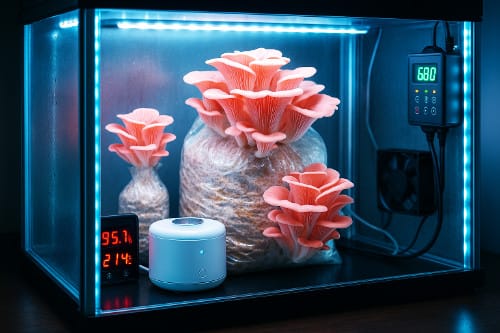
Mycologists rejoice! Growing mushrooms at home has gone mainstream—and it’s getting a tech upgrade. Forget musty kits shoved in dark closets. Today’s mushroom-growing gear blends sensors, automation, and science-lab precision to help even beginners cultivate gourmet fungi with near-magical consistency. Whether you’re craving lion’s mane for your nootropic smoothie or just want to impress guests with home-grown oyster mushrooms, the future of fungi is fresh, smart, and kind of beautiful.
What’s New in Home Mushroom Tech
Mushroom cultivation is all about maintaining very specific conditions: temperature, humidity, airflow, and light. Too dry? No mushrooms. Too warm? Contamination. It’s a Goldilocks zone of biology, and until recently, that meant constant babysitting or messy DIY fixes.
Today’s tech? It’s practically plug and play. Here’s what’s new:
1. Smart Mushroom Fruiting Chambers
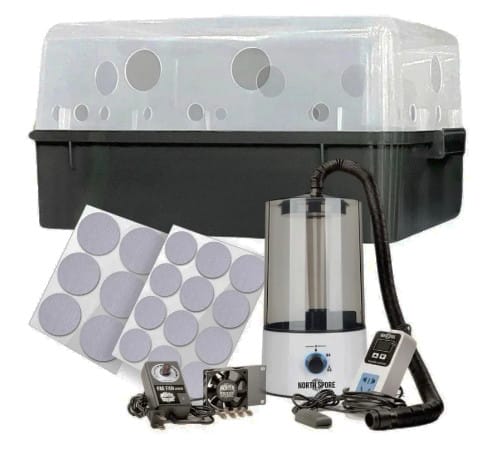
Modern mushroom fruiting chambers—also known as “grow boxes”—now come equipped with IoT (Internet of Things) tech. These sleek countertop units monitor and automatically adjust humidity, temperature, and airflow. Think of it like a terrarium crossed with a wine fridge.

The automated BoomerBin monotub
2. Sensor-Based Environmental Monitors
If you like geeking out on data, you can outfit your grow setup with Bluetooth sensors to log humidity, temp, and CO₂ levels. Tools like SensorPush or Govee can send alerts to your phone if your mushrooms are in trouble.
3. Automated Misting & Air Exchange
Ultrasonic humidifiers controlled by smart switches (like Kasa Smart Plugs) can mist your mushrooms on a schedule. Pair it with a small fan on a cycle timer, and you’ve got airflow and humidity dialed in without lifting a finger.
Bonus: You can control it all from your phone—or even integrate it into a smart home system with voice commands. “Alexa, mist the mushrooms.”
4. High-Tech Spawn and Substrate Innovations
Even the substrates (growing medium) are getting a glow-up. Companies now sell sterilized substrate bags pre-inoculated with gourmet strains, sealed and ready to fruit. Some include injection ports and air filters for clean airflow and reduced contamination.
Cool tech note: Some growers are experimenting with liquid culture syringes grown in lab-like conditions to ensure genetics are clean and strong—kind of like sourdough starter, but for mushrooms.
5. AI and App Guidance
Platforms like Shroomify or MushroomGrowerPro offer strain-specific grow schedules and alerts, guiding users with step-by-step instructions. Some integrate with smart sensors to provide recommendations based on your live data—“Your humidity is a bit low for pink oyster. Consider misting more frequently.”
It’s like having a mushroom consultant in your pocket.
What Can You Grow?
With these tools, the home grower isn’t limited to button mushrooms. Some popular choices:
- Oyster (blue, pink, golden) – Fast and forgiving
- Lion’s Mane – Great for brain health, super fuzzy and dramatic
- Shiitake – Rich, meaty flavor, but needs patience
- Enoki – Beautiful, but delicate conditions
- Reishi – More medicinal than culinary, looks like antlers
Then there are the nootropic options, which for obvious reasons I won’t detail here. But the same basic knowledge, tech and know-how applies.
A Quick Anecdote from the Garden Lab
Last winter, I set up a small box on my kitchen counter with a simple growbag that was inoculated with Lion’s Mane. I grew a flush of Lion’s Mane mushrooms that looked like white coral reefs. In about 14 days, I had a large cauliflower-sized growth. I sliced it up and sauteed in a little garlic and butter and YUM!
Whether you’re a curious cook, a health nut, a psychonaut, or just like weird science experiments that you can eat, the tech is ready for you.
by Patrix | Jun 16, 2025
This is the time of year that backyard tomato growers are nurturing their plants and hoping for a large and delicious yield. If your tomato plants are lush and leafy but skimping on the fruit, you’re not alone. Growing tomatoes can sometimes feel like you’re giving a lot of love but not getting much in return. There are a few strategic tricks that I have discovered that can dramatically boost your tomato yield — including one surprisingly effective hack that involves a humble electric toothbrush.
Let’s walk through a few proven methods to coax more tomatoes from your plants.
1. Prune for Power
Tomato plants are naturally vigorous, often growing a wild tangle of stems and leaves. But all that leafy energy can come at the expense of fruit production. That’s where pruning comes in.
By removing the “suckers” — those little shoots that grow in the crook between the main stem and a branch — you’re helping the plant focus its energy on the main stems and fruit clusters. Pruning also improves airflow, reducing disease risk and allowing sunlight to reach the inner branches. Healthier plant, more tomatoes.
2. Feed Like You Mean It
Tomatoes are hungry. To get high yields, you’ve got to keep them well-fed — but not just any fertilizer will do.
- Start with a balanced fertilizer when transplanting (like 10-10-10).
- Once the plant starts flowering, switch to a low-nitrogen, high-phosphorus formula (like 5-10-10).
Too much nitrogen = lush leaves and very few tomatoes. Phosphorus encourages flowering and fruiting. Think of it as a shift in diet once your plant hits puberty.
3. Stress Just a Little (But Not Too Much)
This one sounds counterintuitive, but slight water stress can encourage tomato plants to fruit. When the plant senses a tough season ahead, it shifts into survival mode — producing fruit and seeds to reproduce.
Don’t let your plant wilt or dry out completely, but slightly reducing watering once the fruit sets can prompt more consistent ripening and bigger yields.
4. The Ingenious Electric Toothbrush Trick
Tomatoes are self-pollinating, which means they technically have both the male and female parts on the same flower. But for successful fruit set, the pollen still needs to move — and in nature, bees or the wind usually help.
Enter: the electric toothbrush.
Yep, that $20 multipack from Costco might be the best tomato tool you own. Here’s how it works:
- Wait until your tomato plants are flowering.
- Turn on the toothbrush and gently touch it to the flower stem, not the petals themselves.
- Just a couple of seconds per flower cluster will do. The vibration shakes loose the pollen, simulating the buzz of a bee.
This method — sometimes called buzz pollination — dramatically increases fruit set, especially in greenhouses or in calm weather where natural pollinators are scarce.
I tried this last summer on a few Cherokee Purple plants that weren’t producing. After giving each flower a quick buzz every morning, I had more tomatoes than I knew what to do with. It’s simple, cheap, and oddly satisfying.
A few flowers a day, a few seconds per cluster — and suddenly you’re a tomato whisperer. Add that to smart pruning and the right fertilizer, and you’ll be hauling in baskets of ripe, juicy tomatoes in no time.
I still plant pollinator flowers throughout my garden to encourage nature to do its thing. But sometimes a clever hack can make a big difference.
Happy tomato-ing!
by Patrix | May 25, 2025
That awkward strip of land on the side of your house? It’s got serious potential. Whether it’s sun-drenched or shady, wild or weedy, you can turn it into a thriving little oasis—with some help from AI.
Using AI to plan and visualize your garden isn’t just for tech geeks. It’s for anyone who wants to skip the overwhelm and start digging with confidence. Let’s walk through how to design a side garden the smart way—guided by your creativity and assisted by AI.
Why Use AI for Garden Planning?
Good gardening is part art, part science. AI helps fill in the science-y bits so you can focus on the fun stuff—like choosing your color palette, imagining how it will smell in summer, or figuring out how to cram one more tomato plant into a too-small bed.
With just a few prompts, AI can help you:
- Pick plants that match your space and climate
- Design a layout that maximizes sun, airflow, and beauty
- Generate images to visualize the finished garden
- Create a planting and maintenance calendar
- Troubleshoot problems as your garden grows
Step 1: Describe Your Garden Space to AI
Start with ChatGPT or your preferred AI assistant. Give it a simple description of your space, like:
Help me plan a small side garden that’s about 3 feet wide and 12 feet long. It gets 5–6 hours of sun in the afternoon. I live in San Luis Obispo, and I’d like mostly low-maintenance plants that attract bees and butterflies.
Within seconds, you’ll have a suggested list of plants, ideas for layout, and maybe even soil tips. You can refine your request as much as you want: add a color theme, focus on edibles, or ask for deer-resistant options. AI won’t get tired of your follow-up questions.
Step 2: Generate a Visual of Your Future Garden
Once you have a general idea of what you want to grow, you can create an image of your imagined garden using AI tools — and yes, ChatGPT is one of them.
If you’re using ChatGPT with image generation (like the Plus plan with DALL·E built in), you can simply type something like:
Create an image of a narrow side yard garden with raised beds, blooming lavender and salvia, and a stepping stone path. There’s a wooden fence on one side and sunlight coming in from the left. Use a 3:2 aspect ratio.
ChatGPT will generate a custom image for you right in the chat. You can tweak the prompt until it matches your vision—add vertical elements, more color, or change the season.
If you don’t have image generation in ChatGPT, you can copy your prompt into tools like DALL·E (via Bing), or Midjourney. The goal is the same: bring your garden idea to life before you touch a trowel.
This is like having a virtual sketchpad for your green dreams—instantly adjustable and surprisingly inspiring.
Step 3: Let AI Help with Layout and Spacing
Spacing is one of the trickiest parts of planning a small garden. AI can help you figure out how to avoid crowding while still packing in the plants. Ask it:
How far apart should I plant lavender, yarrow, and oregano if I want a natural, cottage-style look?
It can even suggest companion plants or warn you about species that don’t play well together. You can also ask it to generate a simple grid-style layout to print or sketch onto your site plan.
Step 4: Build a Planting Calendar
Want to know when to plant your seeds or transplant your starts? AI can help create a customized calendar based on your location and plant list. Try:
Give me a monthly planting and maintenance schedule for a pollinator-friendly side garden in USDA Zone 9b.
You’ll get a timeline for planting, pruning, fertilizing, and even harvesting—without digging through a dozen different websites.
Step 5: Add a Bit of Tech to Your Soil
If you enjoy the techy side of things, consider adding a few smart tools to your garden setup:
- Soil moisture sensors that sync with your phone
- Smart irrigation timers with weather-based scheduling
- AR plant ID apps to identify mystery weeds or track blooms
It’s a low-effort way to stay connected to your garden, even when life gets busy.
AI Empowers Gardeners
Planning a garden used to mean flipping through books, sketching diagrams, and hoping your choices would work. With AI, you can test ideas, refine plans, and even dream up alternate designs before committing a single seed to the soil.
And once it’s planted? You’ll still be the one watering, weeding, and pausing to watch the bees. But now you’ll know that every plant earned its spot—and your side yard won’t feel like a leftover space anymore.
by Patrix | May 22, 2025
If you’re looking for a plant that checks all the boxes—easy to grow, nearly impossible to kill, purifies your air, and even produces oxygen at night—look no further than the Mother-in-Law’s Tongue, also known as the Snake Plant or Dracaena trifasciata (formerly Sansevieria trifasciata).
This sculptural beauty with its upright, sword-like leaves has earned a permanent spot in homes, offices, and minimalist design studios across the world. And it’s not just for looks. Let’s explore why this plant is more than just a pretty face.
A Champion of Air Purification
The Snake Plant was famously included in a NASA Clean Air Study, which found it capable of filtering out harmful indoor pollutants like:
- Formaldehyde (found in cleaning products and furniture)
- Benzene (from paints and plastics)
- Xylene and Toluene (from glues and varnishes)
While one plant won’t turn your home into a sterile lab, adding several can subtly improve indoor air quality—especially in enclosed spaces.
It Produces Oxygen
Unlike most plants that take a break from oxygen production when the sun goes down, the Snake Plant keeps working. Thanks to Crassulacean Acid Metabolism (CAM) photosynthesis, it opens its pores at night to absorb carbon dioxide and release oxygen.
This makes it one of the few plants that’s actually ideal for bedrooms. It quietly refreshes the air while you sleep.
Resilient and Nearly Indestructible
The Snake Plant thrives on neglect. That’s not a joke—it’s actually better to forget to water it than to overwater it.
- Watering: Every 2–4 weeks, depending on the humidity and temperature.
- Light: Prefers bright, indirect light but tolerates low light and even some direct sun.
- Soil: Needs well-draining soil—cactus or succulent mix is perfect.
- Pot: Use a pot with drainage holes to prevent root rot.
It’s drought-tolerant, pest-resistant, and adapts to a wide range of environments. Whether you live in a sun-drenched loft or a dim apartment, it won’t complain.
Easy to Propagate
Want more Snake Plants for free? You can easily propagate new plants from a single leaf. Just cut a healthy leaf, let the cut end dry for a day or two, and root it in water or soil. It’s a slow grower, but very rewarding.
One thing to note: if you’re propagating a variegated variety like Laurentii, the new plant may lose its yellow stripes. If you want an exact clone, use rhizome division instead of leaf cuttings.
Aesthetic Appeal
This plant adds structure and style to any room. Its tall, vertical form pairs well with modern, minimalist, or bohemian interiors. Whether potted in sleek ceramics or rustic baskets, it adds natural elegance without being flashy.
Pet Caution
One small downside: it’s toxic to cats and dogs if ingested. It’s not deadly, but can cause nausea or vomiting. Keep it out of reach if you have curious pets.
If you’re starting your plant journey, or just want something that offers real value without demanding your time, the Mother-in-Law’s Tongue is hard to beat. It’s more than décor—it’s a living, breathing air filter with timeless charm and effortless care.
Add one (or a few) to your home and let this green warrior quietly do its thing—no nagging required.