
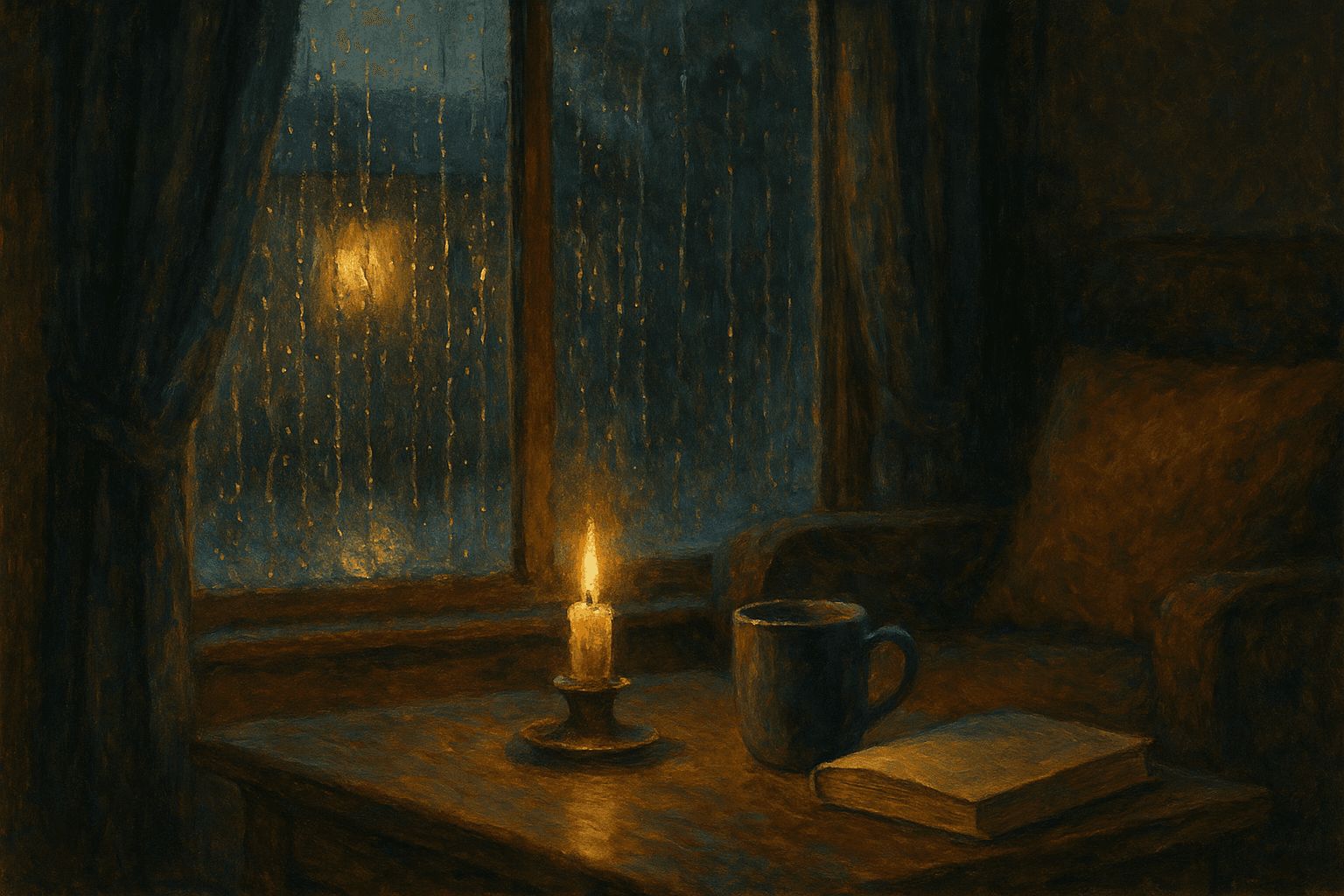
There’s a kind of evening when the world seems to sigh in relief. Rain drifts softly against the windows, the air smells faintly of earth, and the lights inside take on a golden glow. It’s a mood that wraps around you, quiet but alive. A rainy night has a way of smoothing the edges of the day. It tells you, without words, that it’s time to rest.
For reasons both scientific and emotional, rain has always been comforting. It’s not only about being dry indoors; it’s about being protected. There’s something ancient and familiar in the rhythm of falling water, as if the planet itself were humming a lullaby.
Why Rain Feels Like a Hug for the Nervous System
The calming effect of rain isn’t just in our imagination. The steady patter produces what’s called pink noise, a gentler cousin of white noise. It evens out sudden sounds and helps the brain settle. That’s why so many people drift off more easily when it’s raining. The pattern tells our nervous system that the world outside is stable and safe.
Long before smart homes and streaming playlists, our ancestors found the same comfort in a rainstorm. It meant they could rest. Animals were quieter, the air was cooler, and there was less to fear. That instinct remains in us, even if the campfire has been replaced by a reading lamp and a cup of tea.
When the world outside turns damp and gray, the interior world feels richer. Candlelight seems to glow with more purpose. The steam from a cup of cocoa rises like a small celebration. The ordinary suddenly becomes precious.
The Art of Doing Nothing
Rainy nights remind us that stillness isn’t a flaw in the schedule. The sound on the roof, the smell of wet pavement, the fog on the window—these are invitations to slow down. A culture that rewards constant motion rarely gives permission for rest, but the rain does. It falls without judgment, asking nothing in return.
Doing nothing well is its own quiet craft. You might light a candle, pull a blanket close, and simply listen. Maybe you cook something slow and fragrant, letting the scent fill the house. Or you sit with an open notebook, waiting for thoughts to drift through. The rain doesn’t demand activity; it offers space for reflection.
Creative people often find this time restorative. Artists, writers, and dreamers know that ideas sometimes arrive only when we stop chasing them. The gentle rhythm of the rain is a companion to imagination—a muse in liquid form.
Digital Rain and Modern Comfort
Technology has made it possible to bring that same atmosphere anywhere. A rainstorm playlist, a looping video of thunderclouds, or a smart lamp that mimics candlelight can recreate the feeling of a rainy night even in the desert. What once required weather now fits in your pocket.
There’s a subtle beauty in that. In a fast, digital world, our devices are learning how to help us slow down. AI-generated soundscapes and ambient art installations are helping people reconnect with something ancient. Maybe that’s what the meeting point of art and technology truly is: a way to remember what it means to be still.
When the screen glows softly and the rain sounds play through the speakers, you can almost forget that the weather outside is dry. It’s an illusion, but a healing one. It gives the mind the same permission the real thing does—to breathe.
Memory, Melancholy, and the Rain
Rain has a way of stirring emotion. It invites us to look inward, to remember, to feel. Nostalgia rises as easily as the scent of wet earth. Sometimes it brings a quiet sadness, but it’s the kind that soothes rather than stings. Like washing dust from a window, the rain clears the mind.
It also softens memories. You might think of someone you once knew, a house you once lived in, or a night that mattered for reasons you can’t quite explain. Under the sound of rain, even loss feels gentler. The melancholy becomes a kind of music—a reminder that feeling deeply is its own form of being alive.
Poets and filmmakers return to this again and again because rain is both metaphor and mood. It’s the sound of reflection, the light of memory, the silence between thoughts.
The Ritual of Comfort
Rain encourages ritual. A soft sweater, a warm drink, a pet curled nearby—these small gestures become ceremonies of peace. They remind us that comfort doesn’t depend on grand moments. It lives in ordinary things: a roof overhead, the scent of rain, a moment of gratitude for both.
You might put on a slow record, make soup from scratch, or simply sit by the window and watch. These are quiet rebellions against the noise of the day. They tell the body and mind that there is value in calm, that not every hour needs to be filled with achievement.
In the glow of lamplight, with the soft percussion outside, time changes shape. The hours stretch in a good way. You are no longer chasing the day; you are inhabiting it. That is the secret comfort of a rainy night—it draws you back into the present.
Letting the Rain In
So when the clouds gather and the drops begin to fall, don’t rush for the forecast or worry about plans delayed. Let the world slow down. Light the candle. Let the rain speak to the quiet parts of you that are too often ignored.
You are not wasting time when you pause to listen. You are syncing with the rhythm of something older than memory. The comfort of a rainy night comes not from the weather, but from the way it reminds us who we are: small, warm, and wonderfully alive.