by Patrix | Oct 27, 2025
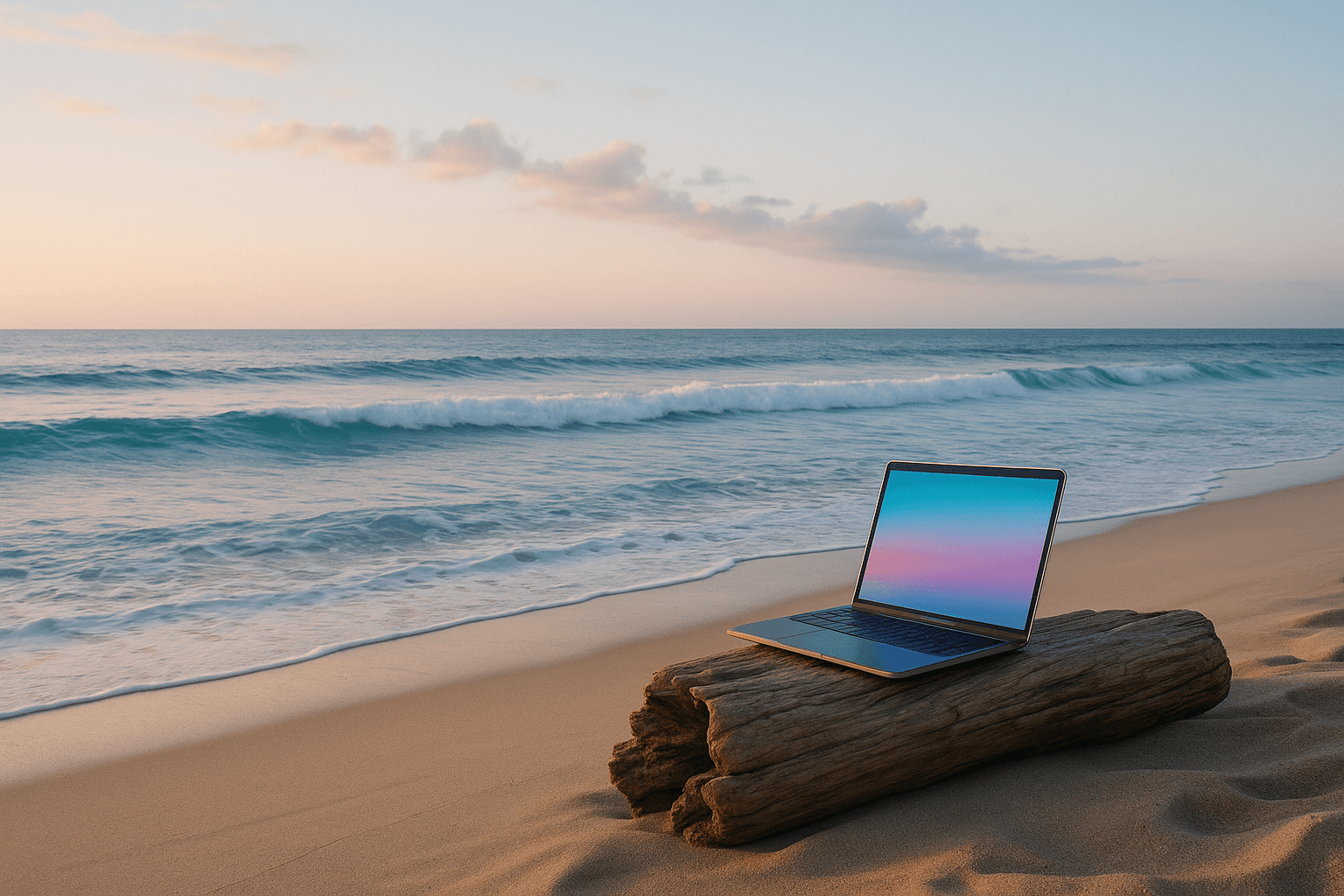
Creativity rarely shows up on command. You can open your laptop, cue your favorite playlist, even brew the perfect cup of coffee, and still find your ideas stubbornly silent. But walk toward the ocean, and something shifts. The chatter in your head starts to soften. Thoughts become lighter, looser. Somewhere between the sound of surf and the scent of salt, your creative mind quietly wakes up.
The beach, it turns out, might be one of the best creative studios there is. No rent, no deadlines, no desk. Just an open invitation to see differently.
The Natural Reset Button
Modern life keeps us perpetually switched on. We scroll, swipe, and refresh more often than we breathe deeply. Our brains are remarkable at processing information, but they are terrible at resting while doing it. The result is a kind of low-grade static that dulls imagination.
The beach doesn’t participate in that noise. Its rhythm is ancient, steady, and impossible to rush. The tide will come in, whether your notifications do or not. When we spend time near that rhythm, we subconsciously match it. Our thoughts slow to something closer to the pace of waves. That slowness is not laziness. It is space, and space is where creativity lives.
The Science Behind the Calm
Marine biologist Wallace J. Nichols calls this state Blue Mind. It is a calm yet alert condition that often appears when we are near, on, or under water. In that state, stress hormones drop and alpha brain waves increase, the same gentle waves of relaxed focus that artists and meditators know well.
Science has finally caught up to what poets always suspected: proximity to water changes how we think. It helps ideas link together more fluidly, almost as if the brain itself starts to drift and merge like currents. Instead of forcing solutions, you begin to notice them. Instead of pushing for originality, you rediscover curiosity.
That simple shift is powerful. When you create from calm instead of pressure, the work feels more like discovery than effort.
A Studio Without Walls
There is something liberating about a workspace that never holds still. The beach is never the same two days in a row. Light moves across the sand like a brushstroke. Colors appear and fade. Even the air feels creative, reshaping every few seconds.
When you make art, write, or think in that environment, the landscape itself becomes a collaborator. You respond to it. You listen. You notice how sound carries differently when it moves across open space. You remember that impermanence can be beautiful, not inconvenient. In that sense, the beach is a lesson in creative flow. Nothing stays fixed. Neither should your ideas.
Bring only a notebook, a sketchpad, or an iPad if you must. Leave the perfectionism at home. Let the environment guide you instead of the outline. The result may surprise you.
Light, Air, and the Digital Detox
Most of us spend our creative hours bathed in artificial light. Screens tell us what color the world should be. Indoors, we work in rectangles, both literal and mental. When you step into natural light, something changes physiologically. Your pupils relax. Your posture opens. Your sense of depth returns.
The ocean reminds your body that you exist in more than two dimensions. The breeze moves across your skin. The light shifts minute by minute. This sensory variety feeds the mind’s need for novelty without overwhelming it. It is stimulation with space built in.
When you create in that kind of light, your attention expands. You stop producing and start participating. That is a rare feeling in a world that measures everything by output.
Imperfection as Inspiration
Sand is not a perfect surface. The wind will move your pages. Seagulls will critique your work loudly. The sun will shift at the worst possible moment. Yet all those inconveniences are part of the creative experience. They remind you that art and life are not meant to be frictionless.
Perfectionism is a form of control, and control is the enemy of discovery. The beach offers gentle resistance. It reminds you that beauty often comes from impermanence, just like wabi-sabi teaches in Japanese aesthetics. The sketch you make in uneven light might not be technically precise, but it might feel truer than anything you’ve made indoors.
The creative process, like the tide, erases itself and begins again. That impermanence is not a flaw. It is freedom.
Bringing It Back Home
Eventually, you pack up and leave the sand behind. You rinse off, open your laptop again, and return to deadlines. But something subtle lingers. Your mind feels less like a machine and more like a landscape. The noise is quieter. The work feels lighter. You realize that the beach did not just inspire you; it recalibrated you.
Creativity is not about running away from life. It is about reentering it with clearer vision. The beach reminds us that ideas grow in cycles, not straight lines. Every tide leaves something behind. Every retreat makes room for something new.
So the next time your mind feels crowded, skip the productivity hacks. Go outside. Let the ocean reset your inner studio. You might come home with pages of ideas, or maybe just a better way of seeing. Either is enough.
by Patrix | Oct 22, 2025
There is something quietly profound about the color grey. It does not shout. It does not sparkle. It does not demand your attention. Yet in the spaces between black and white, it holds the ground where most of life, and most of art, actually happens.
In a world obsessed with brightness and boldness, grey stands for something different. It suggests restraint, thoughtfulness, and quiet depth. Maybe that is why artists, designers, and philosophers return to it so often. Grey is the color of balance, and balance never goes out of style.
The Art of In Between
Grey is not a single color. It is a conversation. It is the meeting point of light and shadow, where the world stops being either or and becomes something more interesting.
Think of J. M. W. Turner and his stormy seas. He layered smoky greys to make the sky churn with emotion. Or think of the steel tones inside an Ansel Adams photograph, where texture and contrast tell more of the story than hue ever could. Grey is the pause that gives space to everything else.
For painters, grey anchors realism. You cannot capture light without an honest account of its absence. A well mixed neutral grey reveals the tone relationships that make a painting sing. For digital artists and designers, grey remains the secret backbone of good work. Every color is tested against it to see how it truly behaves on a screen or a print.
The magic of grey lies in its humility. It lets other colors shine while grounding them. It is the quiet friend in the room who makes everyone else more interesting.
Grey as Emotion
People often talk about seeing the world in black and white, as if clarity lives at the extremes. In truth, most inner lives unfold in shades of grey.
Grey carries the mood of a rainy afternoon when your thoughts feel both heavy and alive. It signals transition. It is the mist before dawn, the calm before a decision, the moment when you are open to a new angle you had not considered. Artists reach for it when they want to say something true that resists simple labels.
In Japanese aesthetics, this quiet restraint has a name. Wabi sabi celebrates imperfection and impermanence. It honors the soft patina of age and the beauty found in understatement. Grey lives comfortably in that space. It carries the wisdom that perfection is overrated and that time deepens form and feeling.
Even Apple, famous for minimalism, understands the emotional resonance of grey. Brushed aluminum, graphite cases, and muted tones communicate trust and calm. It is not the loud colors that make these objects beautiful. It is the greys that frame them and make small details feel intentional.
The Digital Shade
In the digital age, grey has taken on new meaning. It is the default background for many creative tools, including Photoshop, Figma, and Blender. Designers know that pure white can feel glaring and black can feel heavy. Grey creates a neutral ground where ideas can take shape without distraction.
There is a kind of poetry in that choice. Before any creation begins, you are greeted by a soft field of grey. It invites possibilities without prescribing them. It feels like a studio with even light and quiet air. Creativity breathes more easily in that environment.
In photography and film, colorists talk about the grey point. If that balance is wrong, everything feels off. If it is right, a scene takes on life and breath. The same principle carries over to printmaking and digital illustration. A reliable grey reference helps align tones, control contrast, and maintain cohesion across a series of images.
Grey also performs well across devices. Color management can be tricky. Saturated colors shift from screen to screen. A disciplined use of neutral greys stabilizes the visual experience and keeps the eye on composition and form.
Living in the Greys
Maybe the deeper lesson of grey is not just about art. It is also about how we see the world.
Modern life often rewards loud certainty. Opinions grow saturated. Timelines collapse into quick takes. Yet creativity and wisdom tend to show up in quieter places. The grey areas are where curiosity thrives and where good questions become better ones.
Grey reminds us that we can hold two ideas at once. Ambiguity is not weakness. Nuance is a form of respect. It gives complex subjects the room they deserve.
In painting, grey teaches patience. A painter learns to mix warms and cools into neutrals until the tones feel alive. In life, grey teaches perspective. Strong feelings do not disappear, but they gain context. You can see edges more clearly. You can choose with more care.
When you mix too much of any one color, things flatten out. When you let contrast breathe, and you allow the greys to speak, everything gains texture. The same is true of thinking. A measured approach creates depth that a quick certainty cannot match.
Grey is not indecision. It is complexity. It is the choice to refuse a simple story when the subject is richer than that.
A Palette for Creators
For the working artist or designer, grey is both tool and tutor. Here are a few practical ways to engage it with intention.
Start compositions on a neutral grey background. This helps you judge relative values and saturations more accurately than bright white. It also reduces eye fatigue during long sessions.
Test a palette in greyscale. Convert your scene to greyscale or use a value check layer in your software. If the piece reads well in values, the color choices will have stronger foundations.
Explore warm greys and cool greys. A touch of burnt umber or raw sienna shifts a neutral into warmth. A touch of ultramarine or phthalo blue shifts it into coolness. These small moves add emotional temperature without creating a crowded palette.
Use grey as a resting space. In layouts for web or print, neutral sections offer the eye a pause between saturated elements. This rhythm keeps the reader engaged without visual fatigue.
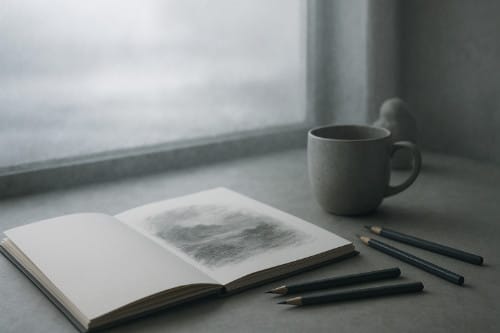
Treat graphite as a medium with its own voice. Sketches in pencil or charcoal show how vibrant greys can be. Pressure, paper tooth, and blending produce a surprising range of tones and textures.
The next time you notice fog over the ocean, a graphite line in a sketchbook, or the soft sheen of a well loved tool, pause for a moment. You are looking at the color of subtlety.
by Patrix | Oct 17, 2025
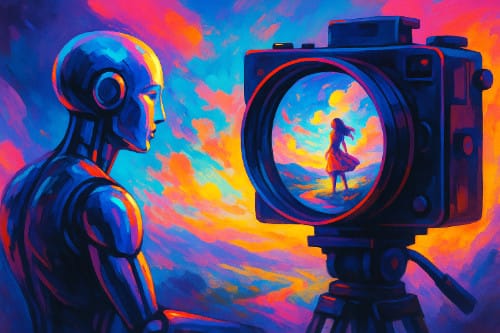
Every once in a while, a new technology feels less like an upgrade and more like an awakening. OpenAI’s Sora 2 is one of those moments. It doesn’t just generate video; it thinks in motion. Watching what it creates feels a bit like watching imagination learn how to use a camera.
When the first Sora appeared, it impressed people by turning short text prompts into moving images. But those clips felt like experiments: flashes of brilliance without continuity. Sora 2 is different. It connects scenes, sustains emotion, and follows light and logic the way a cinematographer would. For artists and filmmakers, it’s thrilling and unsettling all at once.
What Sora 2 Really Does
Sora 2 takes ordinary language and builds living, breathing video from it. You describe what you want — “a child chasing a red balloon through a rainy Paris street” — and Sora 2 delivers it in cinematic realism. Shadows stretch naturally. The camera tracks smoothly. The emotion holds.
What sets it apart is continuity. Earlier AI models could create five-second wonders but stumbled on sequences that needed flow. Now, Sora 2 handles longer scenes with believable transitions and consistent characters. It’s the difference between a flipbook and a film.
There’s also a new sense of interpretation. The model doesn’t just render what you type; it infers intent. It knows the tone behind the words and applies it to movement, light, and pacing. It’s like working with a gifted assistant who understands not just what you asked for, but what you meant.
From Tools to Creative Partners
Sora 2 changes our relationship with technology. For the first time, we’re not operating a machine; we’re directing it. You give guidance; it composes. That’s a quiet revolution in creativity.
When digital music first appeared, purists said it wasn’t “real” composition. Sampling, looping, and digital mixing felt like shortcuts. Yet those tools ended up expanding music itself. Sora 2 is the same kind of inflection point. It doesn’t eliminate artistry; it amplifies it. The keyboard becomes the director’s notebook, and language becomes the new lens.
Still, there’s a question that lingers: when an AI captures the rhythm of emotion, who’s the artist? That question isn’t a flaw. It’s the beginning of a new kind of authorship.
A Shift in Creative Work
For solo creators and small studios, Sora 2 is a windfall. You no longer need expensive cameras or editing suites to make compelling visuals. Storyboard, prompt, refine; that’s your workflow.
Educators can illustrate lessons instantly. Small brands can craft professional ads in an afternoon. Artists can test entire visual ideas without ever renting a light or scouting a location.
For larger studios, the news is more complicated. Routine work will likely move to AI generation. But that doesn’t mean the creative industry disappears. It evolves. The focus shifts from producing what everyone can make to telling what only you can.
Creativity, in other words, moves up the ladder. The new scarcity isn’t content; it’s perspective.
The End of Stock Footage
The stock video industry is quietly trembling. If anyone can generate a perfect “sunset surfer” clip in five seconds, who’s paying $300 for the licensed version? AI footage will outcompete traditional stock for speed, cost, and flexibility.
But something valuable may emerge in its place: authenticity. As synthetic media floods the web, “real” imagery will carry cultural weight again. Stock libraries could evolve into curators of truth, certifying what’s human-made, not machine-made. It’s ironic, but authenticity might soon become the new luxury.
Meanwhile, creators everywhere gain access to visual power once reserved for film studios. A travel vlogger could pre-visualize destinations. A journalist could reconstruct events for clarity. A teacher could animate an ancient civilization for tomorrow’s class. The visual language of the internet is about to grow richer — and noisier.
Learning to Watch Critically
As visuals become indistinguishable from reality, we’ll need to rethink trust. “Seeing is believing” no longer works. The realism of Sora 2 makes the term deepfake feel outdated.
The answer isn’t panic; it’s literacy. We’ll learn to watch the way we learned to read critically online. We’ll judge sources, not pixels. Truth will depend on credibility, not appearance. Over time, society adapts and this generation will develop sharper eyes and better instincts about what to believe.
Technology challenges perception, but it also refines it. In that sense, Sora 2 might be as much a teacher as a tool.
Blending the Creative Ecosystem
Sora 2 doesn’t stand alone. It fits into a growing ecosystem where AI and traditional software cooperate. You can imagine writing your story outline in ChatGPT, creating scenes in Sora, and finishing the cut in DaVinci Resolve.
This is where it gets exciting. The act of filmmaking becomes more like sketching with light. You draft ideas, see them unfold, and adjust. The process feels intuitive, almost playful. In that shift lies a profound truth: creativity is returning to spontaneity. Tools that once slowed us down are starting to disappear into the background.
Language is becoming the universal interface. You don’t have to master complex software; you just have to imagine clearly and describe it well.
Beyond Art and Film
It’s tempting to think of Sora 2 as just an art tool, but its implications go further. Teachers could generate immersive lessons in seconds. Therapists might use personalized visuals to help clients process memories. Historians could recreate events lost to time. Scientists could visualize complex processes instead of describing them abstractly.
When visualization becomes effortless, understanding expands. Sora 2 may quietly become one of the most educational tools of the decade; not because it entertains, but because it helps us see ideas come alive.
The Weight of Infinite Choice
All creative revolutions bring new responsibilities. When anyone can generate anything, the measure of creativity becomes intent. The power is no longer in the making, but in the meaning.
The best artists will be those who choose carefully, who use the infinite canvas to tell something true. In the coming years, originality will depend less on novelty and more on discernment.
Sora 2 doesn’t just extend what technology can do. It expands what we imagine possible. Watching it work feels a little like watching the future assemble itself, frame by frame.
The tool is here. The imagination is infinite. What we do with it will say everything about us.
by Patrix | Oct 13, 2025
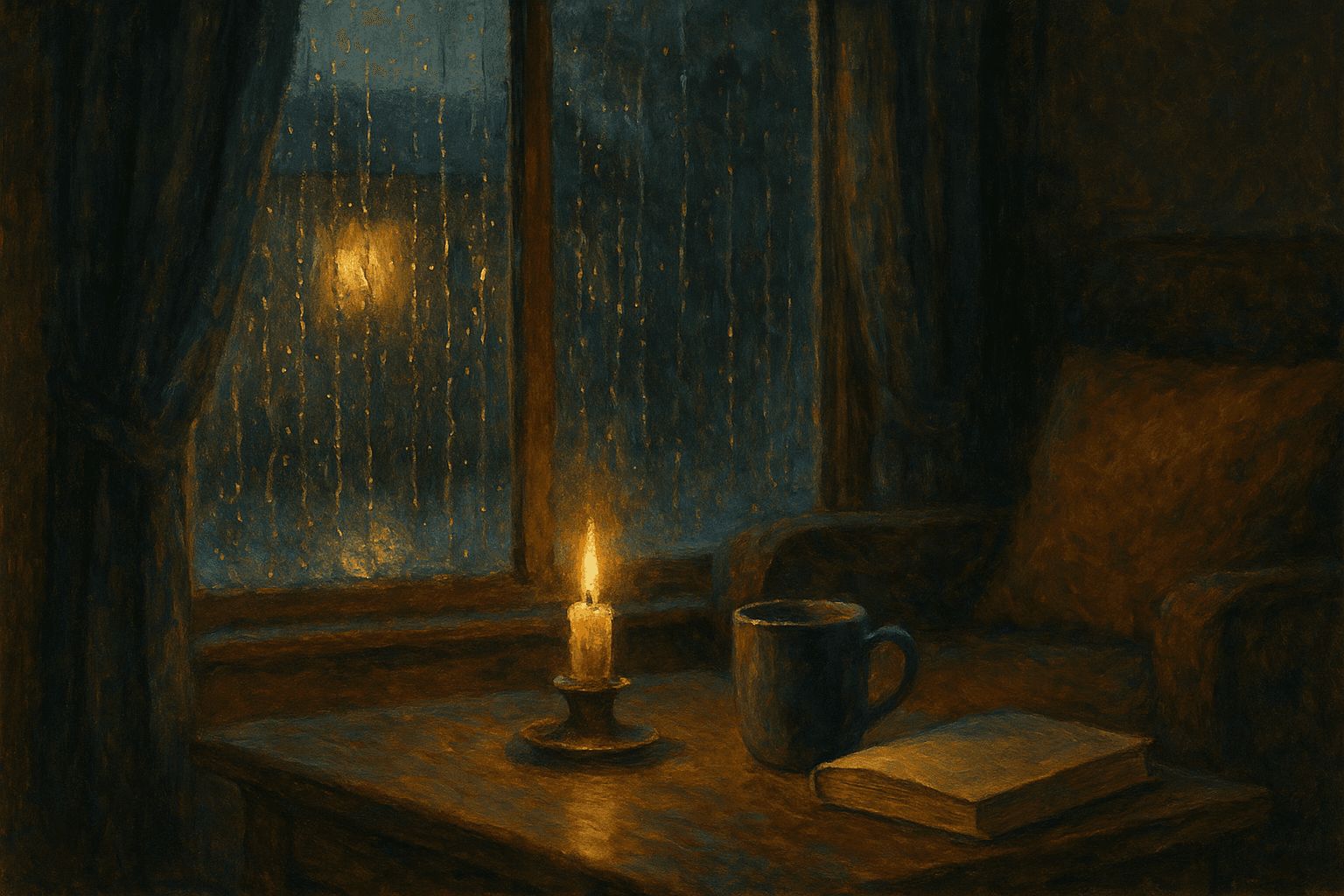
There’s a kind of evening when the world seems to sigh in relief. Rain drifts softly against the windows, the air smells faintly of earth, and the lights inside take on a golden glow. It’s a mood that wraps around you, quiet but alive. A rainy night has a way of smoothing the edges of the day. It tells you, without words, that it’s time to rest.
For reasons both scientific and emotional, rain has always been comforting. It’s not only about being dry indoors; it’s about being protected. There’s something ancient and familiar in the rhythm of falling water, as if the planet itself were humming a lullaby.
Why Rain Feels Like a Hug for the Nervous System
The calming effect of rain isn’t just in our imagination. The steady patter produces what’s called pink noise, a gentler cousin of white noise. It evens out sudden sounds and helps the brain settle. That’s why so many people drift off more easily when it’s raining. The pattern tells our nervous system that the world outside is stable and safe.
Long before smart homes and streaming playlists, our ancestors found the same comfort in a rainstorm. It meant they could rest. Animals were quieter, the air was cooler, and there was less to fear. That instinct remains in us, even if the campfire has been replaced by a reading lamp and a cup of tea.
When the world outside turns damp and gray, the interior world feels richer. Candlelight seems to glow with more purpose. The steam from a cup of cocoa rises like a small celebration. The ordinary suddenly becomes precious.
The Art of Doing Nothing
Rainy nights remind us that stillness isn’t a flaw in the schedule. The sound on the roof, the smell of wet pavement, the fog on the window—these are invitations to slow down. A culture that rewards constant motion rarely gives permission for rest, but the rain does. It falls without judgment, asking nothing in return.
Doing nothing well is its own quiet craft. You might light a candle, pull a blanket close, and simply listen. Maybe you cook something slow and fragrant, letting the scent fill the house. Or you sit with an open notebook, waiting for thoughts to drift through. The rain doesn’t demand activity; it offers space for reflection.
Creative people often find this time restorative. Artists, writers, and dreamers know that ideas sometimes arrive only when we stop chasing them. The gentle rhythm of the rain is a companion to imagination—a muse in liquid form.
Digital Rain and Modern Comfort
Technology has made it possible to bring that same atmosphere anywhere. A rainstorm playlist, a looping video of thunderclouds, or a smart lamp that mimics candlelight can recreate the feeling of a rainy night even in the desert. What once required weather now fits in your pocket.
There’s a subtle beauty in that. In a fast, digital world, our devices are learning how to help us slow down. AI-generated soundscapes and ambient art installations are helping people reconnect with something ancient. Maybe that’s what the meeting point of art and technology truly is: a way to remember what it means to be still.
When the screen glows softly and the rain sounds play through the speakers, you can almost forget that the weather outside is dry. It’s an illusion, but a healing one. It gives the mind the same permission the real thing does—to breathe.
Memory, Melancholy, and the Rain
Rain has a way of stirring emotion. It invites us to look inward, to remember, to feel. Nostalgia rises as easily as the scent of wet earth. Sometimes it brings a quiet sadness, but it’s the kind that soothes rather than stings. Like washing dust from a window, the rain clears the mind.
It also softens memories. You might think of someone you once knew, a house you once lived in, or a night that mattered for reasons you can’t quite explain. Under the sound of rain, even loss feels gentler. The melancholy becomes a kind of music—a reminder that feeling deeply is its own form of being alive.
Poets and filmmakers return to this again and again because rain is both metaphor and mood. It’s the sound of reflection, the light of memory, the silence between thoughts.
The Ritual of Comfort
Rain encourages ritual. A soft sweater, a warm drink, a pet curled nearby—these small gestures become ceremonies of peace. They remind us that comfort doesn’t depend on grand moments. It lives in ordinary things: a roof overhead, the scent of rain, a moment of gratitude for both.
You might put on a slow record, make soup from scratch, or simply sit by the window and watch. These are quiet rebellions against the noise of the day. They tell the body and mind that there is value in calm, that not every hour needs to be filled with achievement.
In the glow of lamplight, with the soft percussion outside, time changes shape. The hours stretch in a good way. You are no longer chasing the day; you are inhabiting it. That is the secret comfort of a rainy night—it draws you back into the present.
Letting the Rain In
So when the clouds gather and the drops begin to fall, don’t rush for the forecast or worry about plans delayed. Let the world slow down. Light the candle. Let the rain speak to the quiet parts of you that are too often ignored.
You are not wasting time when you pause to listen. You are syncing with the rhythm of something older than memory. The comfort of a rainy night comes not from the weather, but from the way it reminds us who we are: small, warm, and wonderfully alive.
by Patrix | Sep 26, 2025
Every so often, the internet throws us something so oddly specific, so strangely irresistible, that it ricochets across social media feeds before anyone has time to ask, “Wait, why are we all doing this?”
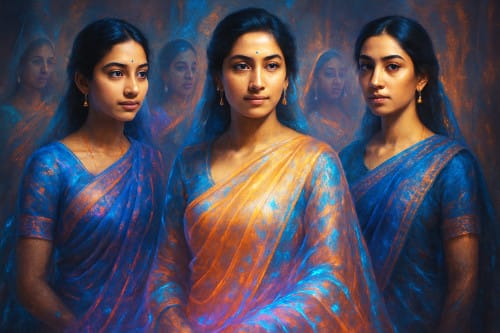
In September 2025, that “something” was the so-called Nano Banana effect — a viral AI filter that transforms everyday selfies into dreamy, hyper-stylized portraits of people wearing elegant sarees. Almost overnight, Instagram, X (Twitter), and WhatsApp groups filled up with friends and strangers alike draped in digital silk, looking as though they’d just walked out of an art-house film.
It may sound like just another passing internet fad, but the AI saree trend has tapped into something deeper. It’s not only about playing dress-up with technology; it’s also about how people see themselves, how AI is shaping beauty standards, and what “authenticity” means in an era of effortless transformation.
What Is the “Nano Banana” AI Saree Trend?
The phrase “Nano Banana” itself is as bizarre as it is catchy. The name comes from a quirky labeling inside Google’s Gemini Nano system, which some users noticed while experimenting with AI photo editing. Developers and meme-makers seized on the name, and before long it became shorthand for an effect that draped digital sarees over user photos.
Here’s how it works:
- A user uploads a selfie into the Gemini Nano interface (or other apps that quickly adopted the filter).
- The AI reimagines the person wearing a saree, often with stylized lighting, jewelry, and a cinematic backdrop.
- The results are shared widely, both because they look stunning and because they carry that irresistible blend of novelty and cultural resonance.
People who might never have worn a saree in real life suddenly found themselves experimenting with the look virtually. For many in South Asia and the diaspora, the trend felt celebratory — like a digital festival where everyone could play a part.
Why Did It Go Viral?
1. Universality with a Twist
Unlike niche filters that target small subcultures, sarees have a broad cultural resonance. They’re traditional, glamorous, and recognizable around the world. Even if you’ve never worn one, you know what one is. AI gave people a low-effort way to try it on.
2. Aesthetic Quality
The filter doesn’t just slap a saree PNG onto your shoulders. The AI generates soft lighting, artistic textures, and an almost painterly finish. It flatters people in a way that most social filters don’t, making participants feel beautiful.
3. The Meme Factor
The absurdity of the name “Nano Banana” added just enough humor to make the trend playful. People weren’t only sharing their AI saree portraits because they looked good; they were also in on the joke.
4. Accessible Technology
Unlike earlier viral AI fads that required hefty computing power, this one worked on smartphones. Accessibility supercharged participation. If grandma could try it on her phone, so could everyone else.
What This Says About Visual Culture
AI as a Mirror of Desire
Filters like this aren’t neutral. They reflect our collective fantasies — about elegance, beauty, nostalgia, or cultural connection. When millions of people choose to see themselves in a saree, it highlights both personal curiosity and broader cultural appreciation (or appropriation, depending on who you ask).
Democratization of Aesthetics
In the past, getting a glamorous saree portrait required a photographer, stylist, and wardrobe. Now it requires about 15 seconds and an internet connection. That’s democratization in action: tools once reserved for fashion shoots are now in the hands of everyday users.
The Question of Authenticity
Of course, there’s also discomfort. When AI puts cultural dress on people who’ve never worn it, does it trivialize tradition? Or does it extend it into new digital realms? Opinions differ. What’s clear is that AI is blurring the line between authentic expression and imaginative play.
The Double-Edged Sword of Virality
Privacy Risks
As with all viral filters, users are handing over selfies to AI platforms. That means sensitive biometric data (like faces) is being stored and processed. Fun today, but what about tomorrow?
Flattening Culture
Cultural garments like sarees have rich, specific histories. When reduced to a generic AI overlay, some argue they risk becoming aesthetic wallpaper rather than respected traditions.
Reinforcing Beauty Norms
While the filter flatters, it also standardizes. Many users noticed that the AI tended to lighten skin tones, smooth features, and apply Eurocentric beauty standards. In other words, even in a saree, the AI “ideal” is not always culturally accurate.
Why the Name Matters
It may seem silly, but the name “Nano Banana” played a huge role in the spread of the trend. Internet culture thrives on absurdity. A filter called “Elegant Saree Generator” might have attracted modest attention. But “Nano Banana”? That’s meme fuel. The name gave people permission not to take it too seriously, which made sharing easier.
This reminds us that virality often depends as much on framing as on substance. The same tech, with a boring label, might never have made headlines.
What Comes Next?
If history is a guide, the AI saree trend will fade, just like the “AI baby face” craze, the “yearbook photo” wave, or the “anime selfie” boom. But its cultural footprint matters. It shows:
- AI fashion filters are here to stay. Expect more culturally specific dress-up filters. Kimonos, kilts, Victorian gowns — the library will grow.
- Identity is increasingly fluid. People are willing to try on looks, traditions, and identities in digital spaces without commitment.
- Visual culture is accelerating. Trends used to last years, then months, now sometimes only weeks. The pace of AI-driven aesthetics is only speeding up.
For digital artists and creators, the takeaway is clear: AI is no longer just a tool; it’s a cultural engine, producing aesthetics and narratives at unprecedented speed.
That’s the power, and the danger, of these tools. They let us see ourselves in ways we might never otherwise imagine. Sometimes that’s liberating. Sometimes it’s unsettling. But either way, it’s a window into how AI isn’t just shaping our images — it’s shaping our sense of self.
by Patrix | Sep 2, 2025
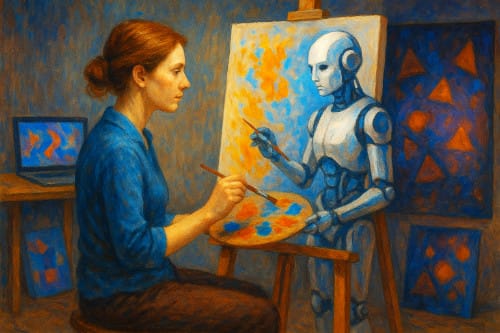
Artist residencies have always been a bit magical. They’re those rare stretches of time when an artist gets to step out of the noise of daily life and dive into their work, supported by space, resources, and a sense of community. For centuries, they’ve been hosted in forests, converted barns, and quirky urban lofts. But now there’s a new twist: residencies where the central “studio mate” isn’t another painter or poet, but an artificial intelligence system.
Welcome to the world of AI art residencies—a place where human creativity and machine learning share the canvas.
What Makes an AI Art Residency Different?
At their core, AI art residencies take the traditional framework of a retreat and superimpose a new collaborator: artificial intelligence. Instead of just providing a studio and a stipend, these programs give participants access to high-powered computers, advanced AI models, technical mentors, and communities of artists all wrestling with the same question: what happens when creativity meets code?
The difference is subtle but profound. Traditional residencies focus on solitude or natural inspiration. AI residencies focus on interaction—with a system that can generate thousands of images in seconds, respond in unpredictable ways, and force the artist to redefine what it means to make something “original.”
Why Now?
It’s no accident that AI art residencies are blossoming in 2025. Over the last few years, generative AI systems like MidJourney, DALL·E, and GPT have exploded into public consciousness. Suddenly, anyone can type in a prompt and get an image, a poem, or even a song.
That accessibility is exciting—but it also raises questions. Who owns the art? What biases are baked into the models? Is the artist still the author if the machine provides the brushstrokes?
Residencies are emerging as the perfect container to explore these questions. They offer time, space, and mentorship to dig beneath the surface, to go beyond quick prompts and memes, and to push the boundaries of what’s possible with AI as a medium.
Real-World Examples
- Runway’s AI Film Residency: Focused on filmmaking, it allows participants to experiment with generative video tools for storytelling.
- Google Artists + Machine Intelligence (AMI): A longstanding initiative pairing artists with researchers to explore the cultural impact of AI.
- AIxDesign Residency in Europe: Brings together artists, designers, and activists to prototype new futures—and critique the ones we’re heading toward.
- Smaller independent collectives are also offering residencies, sometimes run on shoestring budgets, where the main offering is GPU access and peer-to-peer learning.
What unites these programs is not the specific output but the sense of collaboration with an alien partner—a system that doesn’t know beauty or meaning until humans interpret its patterns.
What Do Artists Actually Make?
The outcomes vary wildly, but here are some common directions:
- Generative aesthetics: Pushing visual AI tools to make surreal or hauntingly detailed works.
- Performance art: Staging live shows where AI generates text, visuals, or music in real time.
- Critical design: Projects that reveal AI’s biases or limitations, turning flaws into creative material.
- Cross-disciplinary hybrids: Pairing AI with sculpture, biology, or even food to expand what “digital art” can mean.
One artist described the experience as “collaborating with a slightly unhinged but endlessly productive studio partner.” Sometimes the AI suggests nonsense, sometimes it sparks genius, and often the magic is in the dialogue between the two.
Why It Matters
For artists, these residencies provide something increasingly rare: the chance to shape the narrative of technology rather than just react to it. Too often, AI is framed only by engineers and corporations. By placing artists in the mix, residencies encourage play, critique, and alternative visions.
There’s also a practical benefit. Residencies provide access to tools and computing power that would otherwise be out of reach for most individuals. Training or running advanced models can be expensive, and residencies lower that barrier.
And finally, they expand the very definition of art. Just as photography and film once forced society to rethink what counts as artistic expression, AI is pushing us into new territory. Residencies are where the most thoughtful experiments are taking shape.
A Metaphor for the Moment
Imagine the classic artist retreat: a cabin in the woods, surrounded by birdsong, a canvas propped against the window. Now swap the forest for a server room, the birdsong for the low hum of GPUs, and your quiet studio mate for a machine that speaks in code and images.
It may sound sterile, but the resonance is the same: a place to explore, to get weird, to test boundaries. And just like the forests of old, this new environment is fertile ground—only now the soil is digital.
Why ArtsyGeeky Readers Should Care
For the curious, semi-tech-savvy readers who want to stay connected to both creativity and modern technology, AI art residencies are a glimpse into the near future. They’re not just for coders or gallery insiders. They show how anyone with curiosity and imagination might enter into dialogue with the tools of tomorrow.
Whether you’re a retiree with time to explore new outlets, a digital artist eager to expand your practice, or simply someone who wonders how AI will shape culture, residencies are where those questions are being asked—and sometimes answered.
And who knows? The next great residency might be open to applicants like you.