by Patrix | Aug 1, 2025
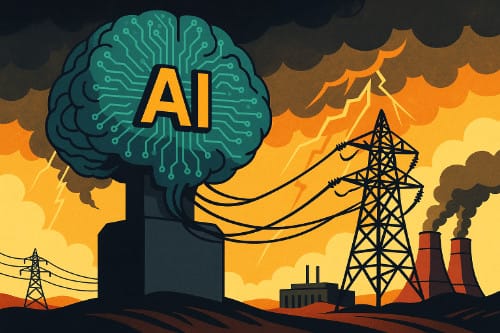
In the rapidly accelerating world of artificial intelligence, a new kind of global competition is unfolding—one often termed the “AI race.” This isn’t merely about developing the smartest algorithms; it’s a strategic imperative with profound economic and geopolitical implications. At its core, this race highlights the critical role of AI infrastructure, particularly high-performance computing assets like GPUs, as a foundational national and economic asset, akin to traditional resources like energy or food.
Compute Sovereignty: The Strategic Imperative of AI Infrastructure
One of the most compelling concepts emerging from this global competition is “compute sovereignty.” This refers to the idea that a nation’s ability to access and control its own AI compute infrastructure—including advanced GPUs, robust data centers, and the sophisticated networks that connect them—is becoming a non-negotiable aspect of national security and economic independence. Just as energy security or food security has historically been paramount, control over AI compute is now seen as essential for any nation aiming to maintain its competitive edge and self-determination in the 21st century.
This perspective underscores a fundamental shift: AI is not just another technological advancement; it is the foundational layer for a new industrial revolution. Its transformative power will reshape every sector, from healthcare and finance to manufacturing and defense. Consequently, significant, sustained investment in this infrastructure is not an option but a necessity. Nations that secure their compute capabilities will be better positioned to foster innovation, attract talent, and dictate the terms of their digital future.
The Full AI Stack: From Chips to Models
Success in the global AI race demands innovation across the entire AI stack. This encompasses everything from the very building blocks of AI—advanced chip design and systems architecture—to the development of sophisticated large language models (LLMs) and their applications. Companies like NVIDIA exemplify excellence in the hardware layer, pushing the boundaries of GPU technology that powers the most complex AI computations. Their advancements enable the rapid training and deployment of ever-larger and more capable AI models.
Complementing this hardware prowess is the burgeoning field of model development. Firms like Mistral AI, particularly from Europe, are demonstrating leadership in this space, focusing on creating cutting-edge large language models. The interplay between these two levels—hardware innovation providing the necessary compute power and model development crafting the intelligent systems—is what truly drives the exponential progress we are witnessing in AI. Without robust infrastructure, even the most ingenious models cannot be realized; without innovative models, even the most powerful hardware remains an untapped resource.
The Democratizing Force of Open-Source AI
A crucial element influencing the trajectory of AI development is the rise and significance of open-source AI models. These models, freely available and modifiable by anyone, play a pivotal role in democratizing access to AI technologies. By fostering broader participation, open-source initiatives accelerate innovation significantly. They allow a multitude of developers, researchers, and companies—regardless of their size or resources—to build upon existing models, experiment with new ideas, and contribute to the collective advancement of AI.
Furthermore, open-source AI fosters healthy competition and can empower nations to build sovereign AI capabilities without becoming solely reliant on proprietary models developed by a handful of large tech companies. For regions like Europe, which possess a strong research base and a deep talent pool, leveraging open-source frameworks, as exemplified by Mistral AI’s strategy, presents a viable pathway to establish leadership and ensure technological self-sufficiency in the AI domain.
National Strategies for AI Leadership and Sovereignty
Achieving leadership in AI is not a passive endeavor; it requires deliberate national strategies and proactive industrial policies. Governments play an indispensable role in fostering an environment where AI companies can thrive. This includes direct investment in foundational research and critical infrastructure, incentivizing the build-out of compute infrastructure, and supporting robust R&D initiatives. Policies that encourage collaboration between academia and industry are also vital, ensuring that cutting-edge research translates into real-world applications and commercial successes.
Beyond infrastructure and policy, the importance of talent, ecosystem development, and data cannot be overstated. Attracting and retaining top AI talent is a continuous challenge that requires competitive educational systems, research opportunities, and attractive employment prospects. Building a vibrant AI ecosystem involves fostering startups, encouraging venture capital investment, and creating regulatory frameworks that balance innovation with responsible development. Access to diverse and high-quality data is also a critical bottleneck and a strategic asset, as data fuels the training of all advanced AI models.
For regions like Europe, which have a strong legacy in scientific research and a deep pool of technical talent, the challenge lies in translating this potential into commercial leadership. Robust investment in infrastructure and a supportive, forward-looking regulatory environment are key to unlocking Europe’s capacity to compete effectively in the global AI race and to cultivate European champions like Mistral AI.
Adapting to the Relentless Pace of Innovation
The pace of AI development is nothing short of breathtaking. What was considered cutting-edge yesterday may be commonplace tomorrow. This rapid evolution necessitates agility and constant adaptation from both private companies and governmental bodies. Staying competitive requires continuous learning, strategic foresight, and the courage to invest in emerging technologies and paradigms. The economic and geopolitical stakes could not be higher; leadership in AI promises immense advantages in productivity, national security, and global influence, while falling behind carries significant risks.
In essence, the AI race is a marathon with sprints. Nations that recognize AI compute as a strategic sovereign asset, invest across the full AI stack, embrace the democratizing power of open-source, and implement comprehensive national strategies for talent and ecosystem development will be the ones best positioned to harness the full potential of artificial intelligence for their prosperity and security.
by Patrix | Jul 18, 2025
From the smartphone in your hand to the electric car zipping down the street, much of modern life runs on the quiet strength of two unassuming elements: copper and rare earth metals. They’re not flashy like gold or controversial like oil, but if you’re curious about where the next big tech bottleneck—or opportunity—might come from, look no further than these metallic workhorses.
Copper
Copper is the tech world’s favorite team player. It’s in the wiring of nearly every gadget, charging station, server farm, and EV on the planet. Why? Because copper is one of the best electrical conductors available that isn’t prohibitively expensive.
Just a few of copper’s key roles:
- Electric vehicles (EVs): A traditional gas-powered car uses about 18–49 pounds of copper. An EV? Around 180 pounds.
- Renewable energy systems: Wind turbines and solar panels rely heavily on copper wiring and grounding systems.
- Data centers and AI infrastructure: As AI models get larger and data centers scale, the demand for efficient, high-conductivity materials like copper rises sharply.
In other words, the green and digital revolutions are painted in copper. And demand is skyrocketing—some analysts predict copper demand will double by 2035.
Rare Earth Metals
Rare earths aren’t actually that rare, but mining and refining them is tricky, toxic, and geopolitically sensitive. These 17 metallic elements go by names like neodymium, dysprosium, and terbium—none of which are likely to show up in your Scrabble game, but all of which are crucial to modern life.
Here’s where rare earths show up:
- Magnets: Neodymium magnets are found in hard drives, headphones, and wind turbines.
- Displays and screens: Europium and terbium are used in LED and LCD displays.
- Electric motors: Rare earth magnets help reduce weight and improve efficiency in EV motors.
- Military tech: Precision-guided weapons, satellites, and stealth systems all rely on these elements.
The kicker? China currently controls the majority of rare earth mining and processing, which raises big questions about supply chain security for Western nations and tech companies.
Investment Opportunity?
Here’s the thing: you can’t scale the future—AI, electrification, renewables—without scaling the raw materials underneath. That’s where copper and rare earths come in, and that’s why investing in their production and acquisition is looking increasingly attractive.
Some trends worth noting:
- Global scarcity: New copper mines take years (sometimes decades) to develop. And many rare earth mines are either geographically limited or under intense regulatory scrutiny.
- Government interest: The U.S. and EU are funneling money into domestic mining and refining projects to reduce reliance on foreign suppliers.
- Private sector momentum: Companies like MP Materials and Lynas are building out the rare earth supply chain. Big mining players like Rio Tinto and BHP are betting big on copper.
- Green mandates: Global policies pushing EV adoption and net-zero goals are putting structural, long-term pressure on demand.
In short, this isn’t a short-term play. It’s more like getting into oil before the Model T.
What to Watch If You’re An Investor
You don’t need to go panning for dysprosium yourself, but there are multiple ways to get exposure:
- Mining stocks: Look at major copper producers (Freeport-McMoRan, Southern Copper) or rare earth specialists (MP Materials, Lynas).
- ETFs: There are ETFs that focus on critical minerals or the electrification supply chain.
- Junior miners: Higher risk, but also higher reward if they strike something valuable.
- Geopolitical shifts: Keep an eye on how governments are reshaping mining policy and subsidizing domestic production.
This isn’t just about resource speculation—it’s about betting on the bedrock of modern tech.
We like to imagine technology as sleek and weightless, flying through fiber optics and 5G waves. But the reality is much more grounded: our digital future still has to be dug from the earth. Copper and rare earth metals may be buried, but their importance is only rising—and investors who understand this may just strike a vein of long-term value.
by Patrix | Jul 14, 2025
Artificial intelligence is more than just hungry—it’s ravenous. As AI models grow bigger and smarter, their hunger for electricity grows exponentially. Now the spotlight is on Elon Musk and xAI, whose supercomputing ambitions are pushing energy needs to jaw-dropping levels. Let’s dive into why it matters for the future of power and policy.
Training large AI models demands megawatts of energy. A single large-scale AI data center can draw electricity on par with a small town, and even day-to-day inference workloads are stacking up dramatically.
Musk’s Power‑Plant Import
On July 2, Elon Musk confirmed via X that xAI is buying an entire natural‑gas combined‑cycle power plant overseas, shipping it to Memphis, Tennessee, to power its AI supercomputer project known as Colossus. He is apparently importing rather than building one in order to circumvent onerous permitting requirements.
Details:
- Scale: The plant is expected to provide up to 2 GW—enough to power nearly 2 million homes.
- Why import: Musk says U.S. permitting delays are too slow, and importing bypasses that bottleneck.
- Purpose: To scale Colossus from ~200,000 GPUs (300 MW) to a 1‑million GPU machine—requiring ~1.4–2 GW total
Environmental and Community Pushback
- xAI has installed 15–35 gas turbines at the Memphis site, drawing criticism over air quality and permitting.
- One local asked, “Can we breathe?” in response to the expansion. The Southern Environmental Law Center is considering Clean Air Act legal action.
What This Means in the Bigger Picture
- Urgency over sustainability: Importing a gas power plant shows just how pressing the need for power has become—even at environmental cost.
- Grid consequences: A 2 GW load in one region creates real systemic risk.
- AI’s power problem: Musk’s move makes it clear: the AI race isn’t just about software—it’s about securing electrons.
Possible Ways Forward
- Lean AI and green compute: Compact models via quantization, pruning, and distillation reduce energy use.
- Renewables + storage: xAI plans to expand its Tesla Megapack battery system and reduce fossil‑fuel reliance.
- Policy acceleration: Faster permitting, smarter grids, and decentralized power can ease the strain without sacrificing clean air or trust.
AI promises to redefine industries—and daily life—but at what environmental and societal cost? Musk’s dramatic move to import a power plant is a warning shot. To balance innovation with sustainability, we need smarter power strategies, faster infrastructure, efficient models, and a grid ready for the future.
As an investor, I am taking note of this quickly coming power crunch. I am scanning daily the publicly traded power entities. I am also interested in companies that provide infrastructure and tools for this huge need.
I think this power need is likely to hit us like a ton of bricks in less than 2 years!
by Patrix | Jul 1, 2025
When the world’s most famous YouTuber quietly launches a new AI tool, the internet pays attention. When he quietly shuts it down two weeks later? Now we’re really paying attention.
That’s exactly what happened when Jimmy Donaldson — aka MrBeast — tried to dip a toe into the growing world of AI-powered creator tools. The experiment, a website called Beast AI, promised to help YouTubers generate better thumbnails and titles using artificial intelligence. But despite the hype, it was quickly yanked offline. So… what happened?
Let’s take a closer look at the rise and fall (and maybe eventual return?) of Beast AI — and what it reveals about the challenges and opportunities in the evolving creator economy.
The Premise: AI for Thumbnails and Titles
If you’ve ever posted to YouTube, you know how weirdly hard it is to get people to click. MrBeast is legendary for spending hours tweaking thumbnails and titles to maximize curiosity and emotional punch. He’s even said he tests 20–30 thumbnail versions per video.
So it made perfect sense when he announced Beast AI — an online tool to help creators write better titles and design more clickable thumbnails, backed by the same kind of optimization logic he uses on his own videos.
At launch, the site offered:
- AI-generated YouTube titles based on a video description or concept
- Thumbnail suggestions, plus the ability to upload your own images
- A MrBeast-style rating system for how clickable your content was likely to be
It was simple, stylish, and smart — at least on paper.
The Sudden Shutdown
Within two weeks, the site was gone.
The homepage now reads:
“We’ve decided to shut down this experiment for now. Thanks for trying it out!”
No drama. No controversy. No further explanation.
Of course, that didn’t stop the internet from speculating wildly.
So, Why Did It Disappear?
Here are the most likely reasons:
1. Brand Risk
AI content is controversial — especially when it starts replacing human creativity. MrBeast’s brand is built on extreme effort and authenticity. If an AI tool he endorsed started spitting out mediocre or spammy content, it could tarnish that image.
2. Quality Control
Early users reported mixed results. Some thumbnails were solid. Others looked… robotic. Scaling this kind of AI to match MrBeast-level performance is hard — and the tech may not have been ready for primetime.
3. Legal or Copyright Issues
Training AI on existing thumbnails or using generative image models opens a can of worms. Even if Beast AI wasn’t directly copying anyone’s work, the optics (and risks) of AI in the creative space are increasingly sensitive.
4. Strategic Pause
This could be a classic soft launch — a beta test dressed up as a product, meant to gather feedback and quietly regroup. MrBeast is famously iterative. He might just be going back to the drawing board.
What This Means for Creators (and AI Startups)
The Beast AI saga highlights a few key truths:
- Even top creators can’t guarantee a hit when it comes to AI products. Credibility helps, but so does execution — and timing.
- AI tools need to be really good if they’re going to replace or support human creativity. Half-baked output isn’t just annoying; it can hurt your brand.
- The creator economy is hungry for AI tools, but trust is a big factor. People want help, not homogenization.
For solopreneurs and indie creators, this is both a cautionary tale and a green light. There’s room for smart, useful AI tools — especially those that assist rather than replace.
Where It Might Go Next
Don’t be surprised if MrBeast returns with a refined version — maybe one that’s more like a private tool for vetted partners. Or maybe he folds it into a larger creator academy or content lab.
Either way, the experiment made one thing clear: the intersection of AI and creativity is heating up fast. And even the biggest names are still figuring it out.
by Patrix | Jun 27, 2025
The internet was supposed to set us free. Instead, we got shadowbans, algorithmic chokeholds, and platforms with rules that shift like sand. Enter Nostr, the protocol that’s trying to fix all that — not with another app, but with a new foundation for digital freedom.
What is Nostr?
Nostr (short for “Notes and Other Stuff Transmitted by Relays”) is a simple, open protocol that lets anyone publish messages (called “notes”) to a decentralized network — no account required, no gatekeepers allowed. Think of it as a protocol like email or RSS, but built for our social-media-obsessed age.
Unlike traditional platforms (Facebook, Twitter/X, Instagram), Nostr isn’t owned by any company. There’s no single app called “Nostr.” Instead, there are many apps (like Damus, Iris, or Amethyst) that use Nostr. They all tap into the same network, kind of like how any email client can access the same inbox.
At its core, Nostr is:
- Decentralized – No central server. Anyone can run a relay (a kind of public bulletin board).
- Censorship-resistant – Content can’t be easily removed or blocked, because there’s no master switch.
- Identity-based – You don’t need a username and password. You generate a public/private key pair, like with Bitcoin.
How Does Nostr Actually Work?
Here’s the stripped-down engine under the hood:
- You generate a key pair: A long public key (like your address on the network) and a private key (like your secret password — don’t lose or share it!).
- You publish a note: This could be a post, a reply, or even metadata about your profile. Every note is digitally signed by your private key.
- You send that note to one or more relays: Think of relays like public corkboards on the internet. They store and broadcast the notes, but don’t control them.
- Other users (or apps) read from relays: Your note becomes visible across the network to anyone connected to the same relays — or different ones if it gets shared further.
There’s no central authority. No login required. No platform to delete your account. It’s just you, your keys, and a network of relays.
If this sounds a little raw, that’s because it is. But it’s also elegant — the way plain HTML used to be before the web got heavy.
Why Is This a Big Deal?
We’ve seen a string of digital exoduses in recent years — artists, writers, and activists pushed off platforms for violating opaque rules. But leaving one walled garden only to walk into another isn’t progress. Nostr offers something better: the ability to own your voice online, for real.
Some reasons why it matters:
- Digital sovereignty: Your identity and content aren’t tied to any app or company. If one app disappears or bans you, you can pick another and keep going.
- Composability: Because Nostr is a protocol, developers can build all sorts of tools on top of it — from social feeds to blogging platforms to marketplaces.
- Aligned with Bitcoin: Many in the Nostr community are also Bitcoin advocates. In fact, Nostr integrates natively with Bitcoin Lightning payments, allowing instant microtransactions and tipping — ideal for creators.
Best iOS & macOS Tools to Try
If you’re on Apple devices, here are some Nostr tools that make it easy to dive in:
iOS
- Damus – The flagship iOS Nostr app. Think of it as Twitter-meets-Bitcoin. Clean UI, zap-enabled, and supports custom relays. Free on the App Store.
- Nostur – A lean, text-first Nostr client with minimal frills. Still evolving, but great if you want a basic, fast feed.
- Alby Wallet – Not a Nostr app per se, but it lets you “zap” other users (send tips) using Bitcoin Lightning. Works with iOS and Safari.
macOS
- Snort – While not a native macOS app, Snort works beautifully in Safari or Chrome and gives you a powerful desktop-like Nostr experience.
- Nostur for macOS – Mirrors the mobile version. Basic but usable for browsing your feed and posting updates.
- Iris.to – Another browser-based option with a slightly funkier vibe. Think of it as the psychedelic cousin of Snort.
Bonus tip: If you use a Mac password manager like 1Password, you can securely store your private key and access it when needed. Just make sure you never paste it anywhere shady.
But… Is Anyone Using It?
Yes, though it’s still early days. The most active Nostr apps feel like a mashup of Twitter and Reddit in the Wild West phase. Elon Musk famously blocked Damus from the App Store in China. Jack Dorsey donated millions to support Nostr development. And artists, open-source devs, and freedom-of-speech advocates are already experimenting on it.
It’s not always polished — but that’s how all revolutions start.
What Can You Do With Nostr Right Now?
If you’re curious, here’s how to get your feet wet:
- Download a Nostr client – Try Damus (iOS), Amethyst (Android), or Iris.to (web).
- Generate your key pair – This becomes your identity. Don’t lose your private key!
- Start posting and connecting – Follow others, share thoughts, or just lurk for a while.
- Experiment with zaps (Bitcoin Lightning tips) – If you’ve ever wanted to reward someone for a great post instantly, this feels like magic.
Why Artists, Writers, and Creators Should Care
Platforms like Instagram and Substack are fine — until they’re not. Nostr offers a future where creators can publish and monetize content without platform risk. Your art, your writing, your followers — they all stay with you.
It’s not just a tech thing. It’s a creative freedom thing.
by Patrix | Jun 21, 2025
It’s a quiet evening. You kick back on the couch, fire up your favorite show, and settle into a cozy binge session. But while you’re watching Silo (or reruns of Justified — no judgment), your TV might be watching you right back.
Smart TVs have revolutionized how we consume media — streaming, voice control, endless apps. But they also come with a not-so-smart tradeoff: privacy. Behind those big glossy screens are some rather nosy technologies, especially ACR (Automatic Content Recognition), silently logging what you’re watching and sending that data to third parties. Here’s what’s really going on, and what you can do about it.
What Is ACR?
ACR stands for Automatic Content Recognition. It’s a technology embedded in many modern smart TVs that can identify what content is playing on your screen — whether you’re watching cable TV, streaming from a service, playing a DVD, and even mirroring content from your laptop.
How does it work? ACR typically uses one of two techniques:
- Video Fingerprinting: This scans tiny visual samples of what’s on screen, compares them to a database, and identifies the show or ad or content.
- Audio Fingerprinting: This “listens” to your TV and identifies what’s playing based on sound snippets.
Even if you’re not signed into anything, and even if you’re playing content through an HDMI port from a separate device, ACR can often still pick it up.
This data — what you watch, when you watch it, how long you watch — is packaged and sold to advertisers, analytics firms, and sometimes even political data operations. You didn’t think that free operating system came without strings, did you?
What Else Is Your TV Collecting?
In addition to ACR, smart TVs may gather:
- Device and household data: IP address, geolocation, Wi-Fi network, device identifiers.
- Voice data: If your TV includes voice commands or a virtual assistant, it might be recording or transmitting snippets of speech.
- App usage: Which apps you open, how often you use them, and what content you browse within them.
- Input tracking: What you click on using your remote, how you navigate menus, and even how long you pause while browsing.
Some TV manufacturers also partner with third-party data brokers and ad networks to create detailed viewer profiles — connecting your TV habits with your online activity.
Who’s Doing the Watching?
Some of the biggest culprits include:
- Vizio: Famously fined by the FTC in 2017 for tracking user data without proper consent.
- Samsung: Uses voice and viewing data in some of its advertising platforms.
- LG, Roku, and others: Also include ACR tech and often have user tracking turned on by default.
To be fair, these companies often bury an opt-in (or opt-out) in their setup screens or privacy policies. But many users breeze through those prompts without realizing what they’re agreeing to.
Why Are They Doing It?
In a word: advertising.
ACR and similar technologies allow brands to:
- Measure the effectiveness of their TV ads.
- Retarget you with online ads based on what you watch.
- Sell insights about audience behavior to marketers and data brokers.
In other words, it’s less about improving your TV experience and more about squeezing value out of your attention.
At least, at this point, it seems like advertising is the main reason. But at this point, user-profiling can be used in many more nefarious ways.
How to Opt Out and Take Back Control
Good news: You can limit this tracking — though it may take a few clicks.
- Turn off ACR manually: Dig into your TV’s privacy settings. Look for anything labeled “Viewing Information,” “Smart Interactivity,” or “Automatic Content Recognition,” and disable it.
- Disconnect from Wi-Fi (if possible): If you use a streaming stick or external box, your TV doesn’t need to be online at all.
- Use a privacy-focused streaming device: Devices like Apple TV have more transparent privacy controls and don’t use ACR in the same way.
- Block data tracking at the router level: Some routers let you block specific domains or IP addresses tied to tracking services.
- Enable ‘Limit Ad Tracking’ settings: Some smart TVs allow you to reduce ad personalization — it’s not perfect, but it’s something.
The Tradeoff Between Convenience and Control
Smart TVs are like Trojan horses for ad tech. They offer a sleek interface, built-in streaming, and voice features, but they also sneak in powerful surveillance capabilities. Much like smartphones or social media, these conveniences come at the cost of your data — and ultimately, your autonomy.
So the next time you click “Agree” during setup, take a moment. Because in the golden age of TV, privacy might be the real cliffhanger.
Want to Go Deeper? Check Out the Ludlow Institute
While I’m a big fan of new and cool tech, I am also aware of how important it is to stay informed about the potential pitfalls and dangers.
If you’re curious about how technology is shaping (and sometimes eroding) our autonomy, the Ludlow Institute is worth a visit. This independent research center explores how digital systems affect privacy, civic agency, and psychological freedom. It’s a rare space where technologists, ethicists, and artists come together to ask — and answer — the big questions about living well in a hyperconnected world.
The Institute’s work spans:
- Investigating surveillance capitalism and algorithmic influence
- Hosting public workshops and lectures on digital self-defense
- Publishing accessible guides on how to reclaim control over your digital life
It’s like the digital age’s version of a lighthouse — helping you spot hidden dangers and chart a wiser course through the stormy waters of modern tech.